With your health insurer
€0
instead of €349.99, for six months
- All Premium features
- For people with statutory or private insurance at our partner insurers in Germany
- Can then be extended through your insurer


What happens in the brain in dementia, what changes in everyday life and how you can challenge memory and language together with myReha.
Dementia changes a great deal. Staying mentally active is one of the things you can do yourself.
1.8 m
people in Germany live with dementia
357,000
people aged 65 and over develop it each year
60–80%
of dementias are caused by Alzheimer's disease
Sources: Deutsche Alzheimer Gesellschaft, Infoblatt 1 (2026). German S3 guideline on dementia, DGN and DGPPN (2026).
Dementia is an umbrella term for diseases in which nerve cells in the brain gradually lose their connections and die. The most common is Alzheimer's disease.
Nerve cells are closely connected and constantly exchange signals. That is how remembering, speaking and planning come about.
In Alzheimer's, the protein beta-amyloid clumps together between the nerve cells, and fibres of the protein tau form inside the cells.
The contact points between nerve cells, the synapses, suffer first. Signals are passed on less well.
Over time nerve cells are lost in more and more areas of the brain. What they used to do becomes harder.
Alzheimer's disease
The most common cause, at 60 to 80%. Short-term memory is usually the first thing people notice.
Vascular dementia
About 5 to 10%. Poor blood supply damages the brain, for example after strokes.
Lewy body dementia
About 5%. Typical signs are fluctuating attention and movement problems like those in Parkinson's.
Frontotemporal dementia
About 3 to 9%. It often changes behaviour or language first.
Mixed forms are common at older ages. Sources: German S3 guideline on dementia (2026); Alzheimer Forschung Initiative; Deutsche Alzheimer Gesellschaft, Infoblätter 2 and 14; DZNE.
The changes usually begin in the middle of the temporal lobe, where the hippocampus forms new memories, and spread from there. The stages merge into one another.
Blue: the areas affected at this stage. The dot marks the hippocampus, deep inside the temporal lobe.
In the brain
First changes around the hippocampus. They can be measured in tests, mainly in short-term memory.
In everyday life
What helps now
For this phase the guideline suggests cognitive training or cognitive stimulation. This is a good time to start.
On average, Alzheimer's dementia lasts about eight years. How fast it progresses differs greatly from person to person.
Simplified view. Sources: Deutsche Alzheimer Gesellschaft, Die Alzheimer-Krankheit and Infoblatt 2 (2024); Alzheimer Forschung Initiative; DZNE; German S3 guideline on dementia (2026).
myReha is a therapy app with more than 100,000 tasks for language, memory and thinking. Every task adapts: not too easy, not too hard.
What was just said is quickly gone, names and appointments slip away. Memories from long ago often stay for a long time.
How you practise with myReha
Memory tasks in small steps: take in pictures, routes or shopping and repeat them shortly afterwards.
The right word is on the tip of the tongue, conversations become more tiring. Many people withdraw because of it.
How you practise with myReha
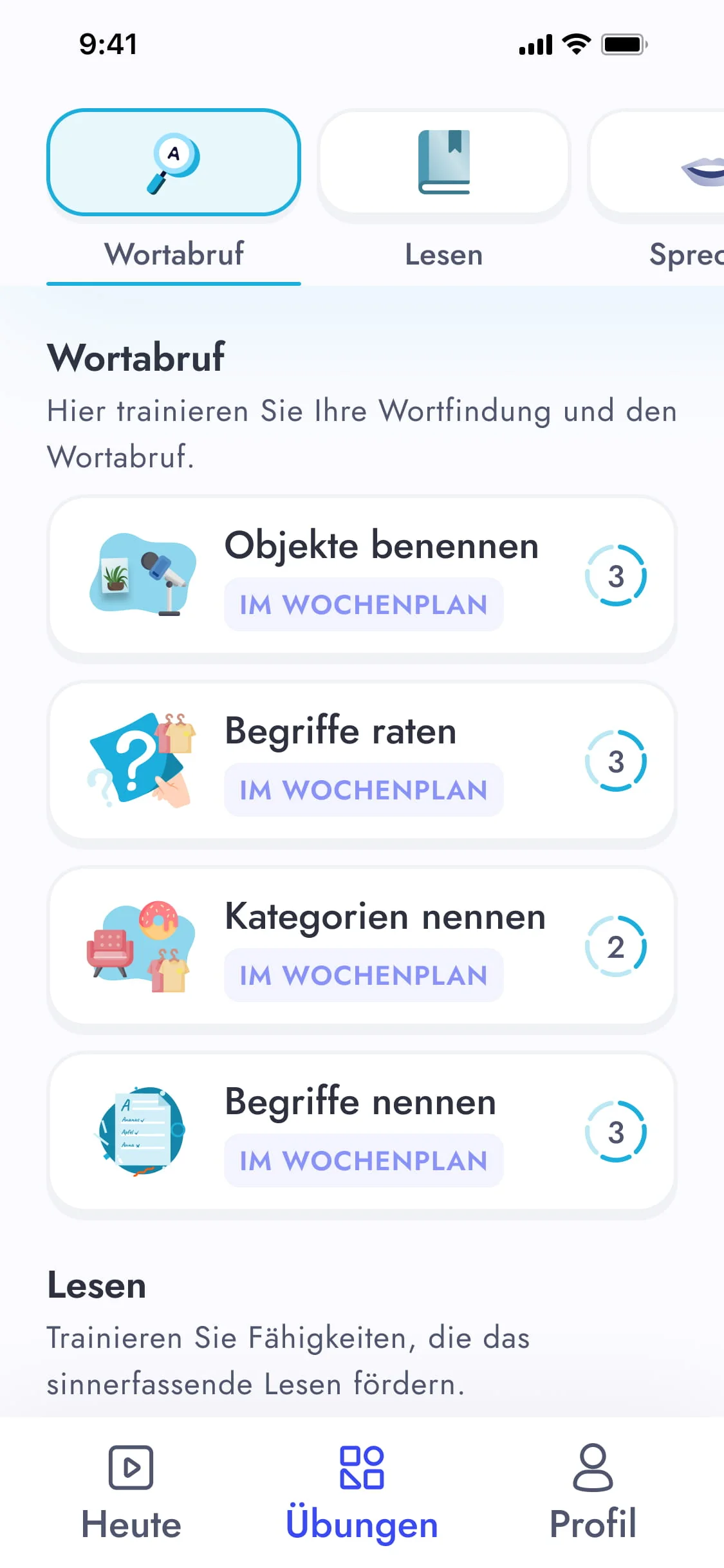
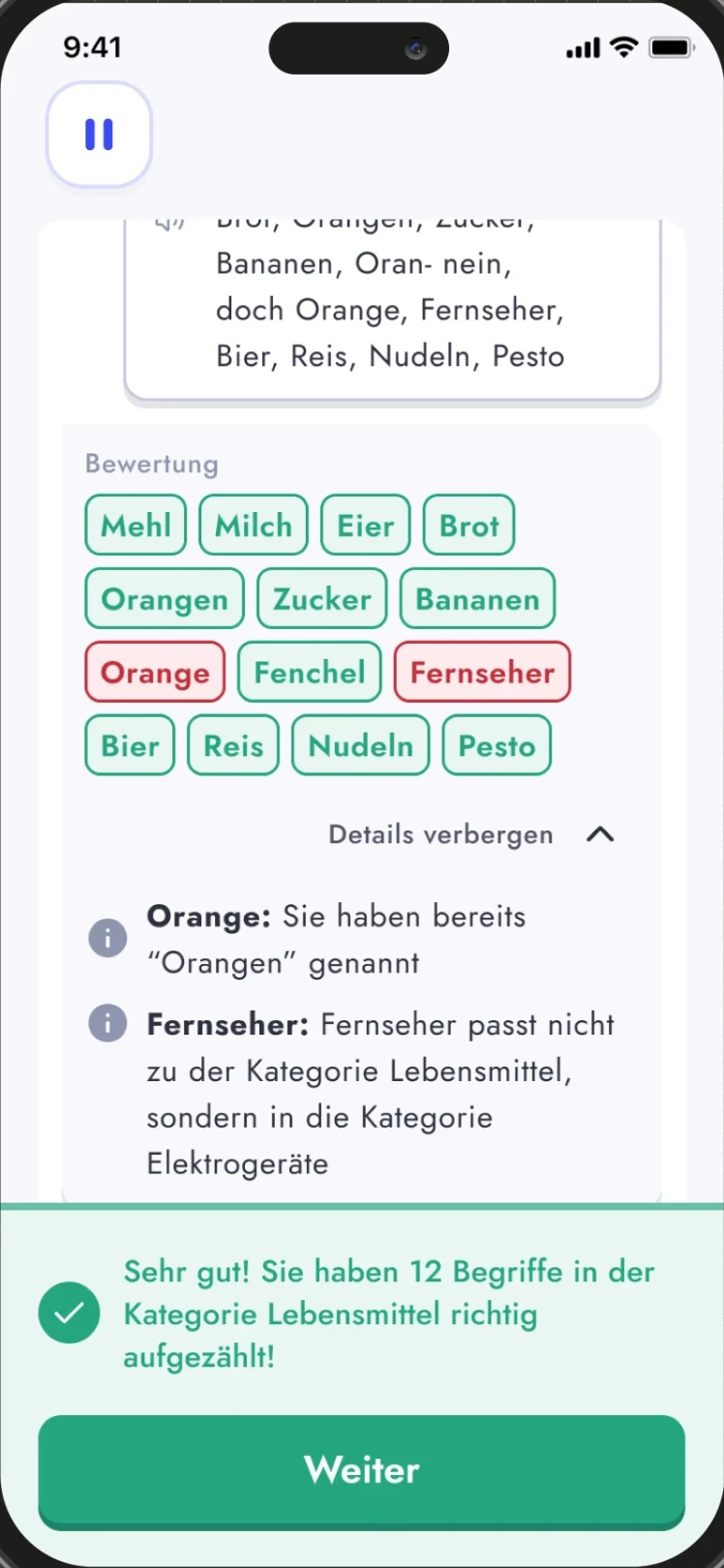
Naming objects, guessing terms, listing categories: you speak aloud, and myReha recognises what you said.
Concentration fades faster, especially when several things happen at once.
How you practise with myReha
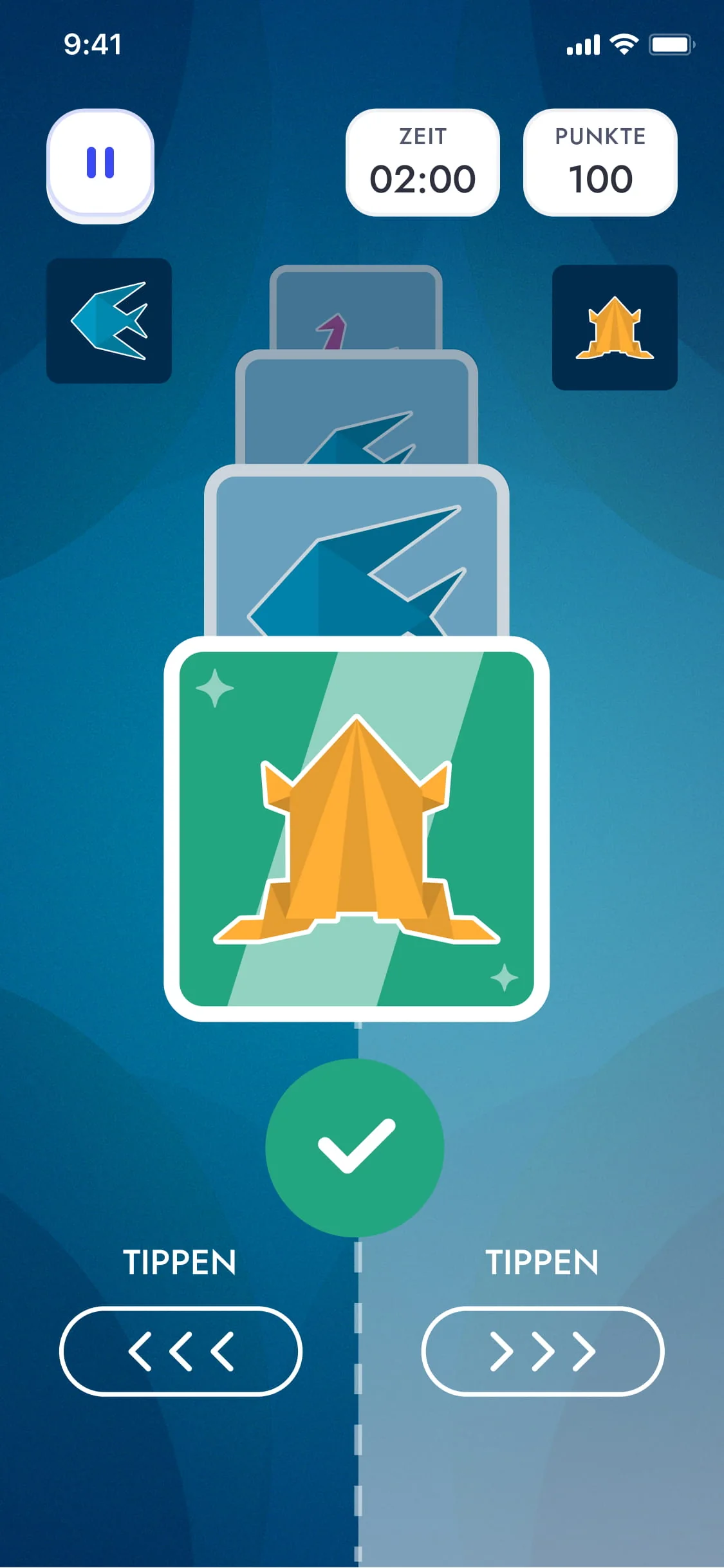
Short tasks that depend on looking closely and sorting quickly, with feedback after every step.
Familiar routines such as cooking or getting dressed get muddled because the order is hard.
How you practise with myReha
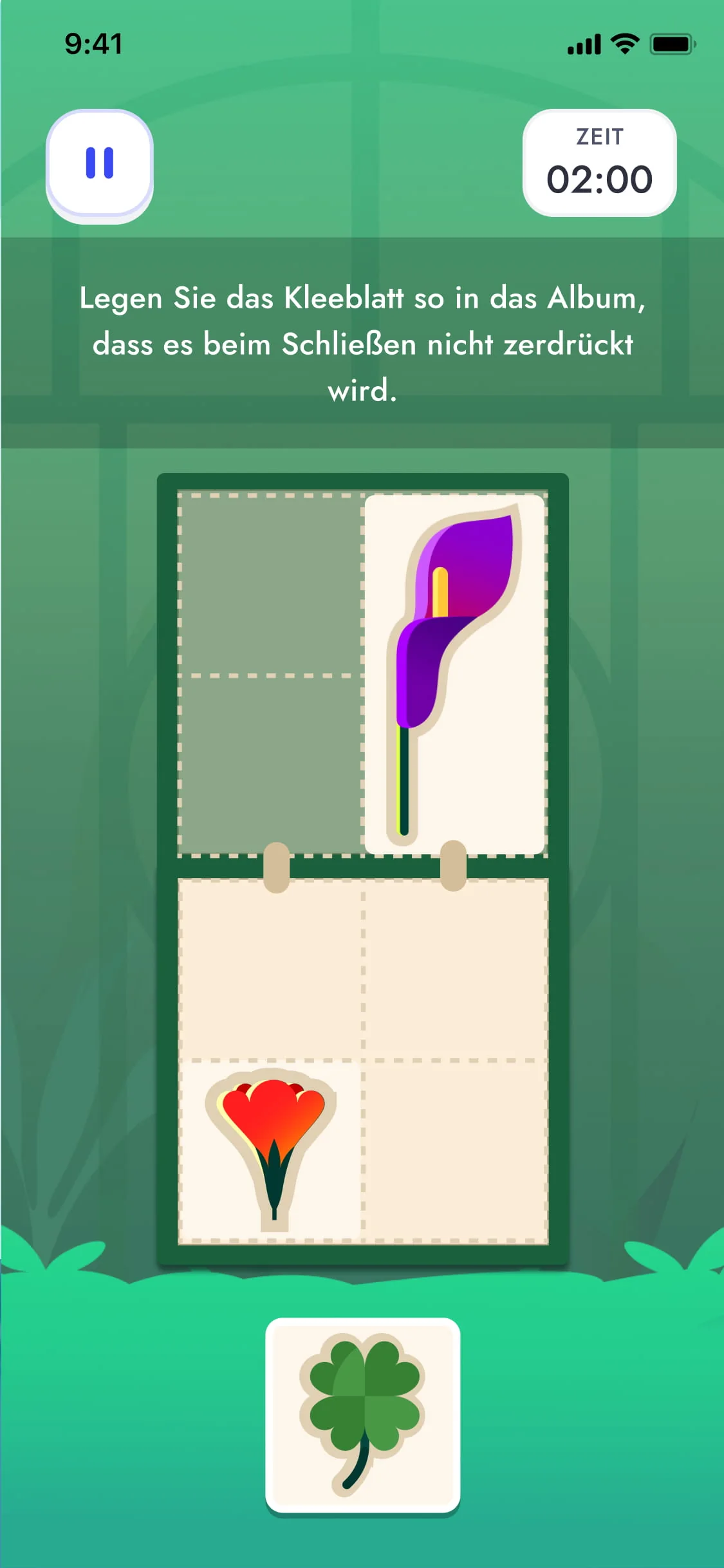
Tasks that call for thinking ahead: what has to go where so that it fits in the end?
Remembering
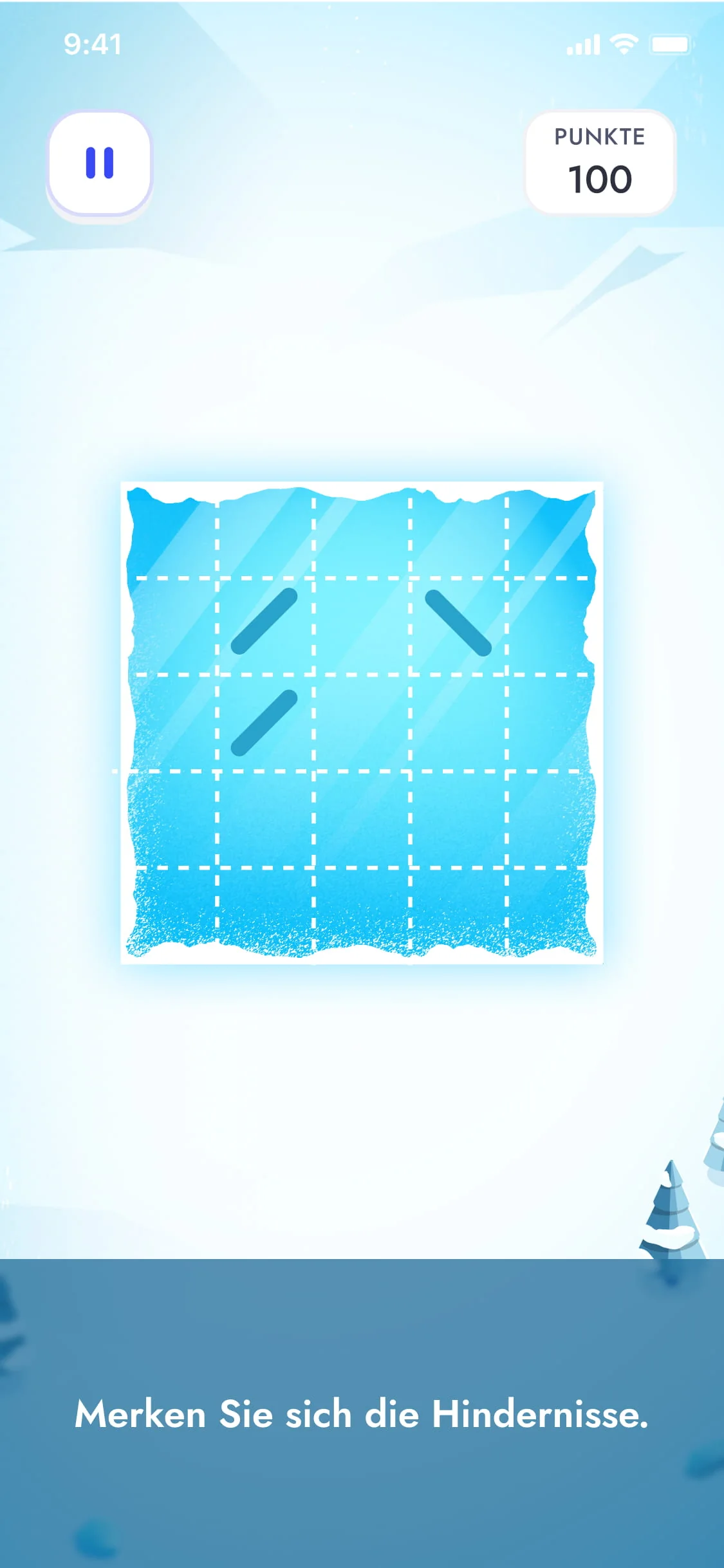
What was just said is quickly gone, names and appointments slip away. Memories from long ago often stay for a long time.
How you practise with myReha
Memory tasks in small steps: take in pictures, routes or shopping and repeat them shortly afterwards.
Dementia cannot be cured so far. But mental activity is among the things experts suggest. We say openly what is proven and what is not.
Cognitive stimulation, meaning conversations, tasks and activities that prompt thinking, probably brings small improvements in mild to moderate dementia: in studies about as much as is otherwise lost in six months.
The German S3 guideline suggests cognitive training and cognitive stimulation for mild and moderate dementia, and also for mild cognitive impairment.
Whether practising alone on a tablet helps in dementia is not yet reliably proven; harm is not to be expected. So practise together, and agree it with your doctor or therapist.
Sources: Woods et al., Cochrane Review 2023. Bahar-Fuchs et al., Cochrane Review 2019. German S3 guideline on dementia, DGN and DGPPN 2026, recommendations 54 to 57.
If a task is too hard, the joy goes; if it is too easy, it goes too. So myReha adapts every task to your last answer. Try it.
Difficulty
A sample task for this page. In the app you will find more than 100,000 tasks with pictures, speech and sound.
1 / 4
Which word does not belong with the others?

You are often the most important support. In practice, the time together and small successes matter more than the result.
Fixed times, short sessions.
A steady daily routine gives security. Practise briefly and regularly instead of rarely and for long.
Praise, don't correct.
Point out what went well and do not draw attention to mistakes. Allow time to answer.
Use what is familiar.
Learning new things is hard; familiar things can be practised and kept. Choose topics from the person's own life.
With many health insurers, myReha is free for you. The check shows in a few steps whether that applies to your diagnosis.
€0
instead of €349.99, for six months
from€58.33
per month, the first 7 days free
The subscription renews automatically and can be cancelled at any time, effective at the end of the term.
€0
to get to know myReha
Your health insurer isn't a partner? More and more insurers cover the cost on request. How to apply.
No. Dementia cannot be cured so far, and no training stops it. But mental activity can help to use and challenge the abilities that are there. For guided cognitive stimulation, studies show small improvements in thinking.
For people with mild cognitive impairment and with mild to moderate dementia who can use a smartphone or tablet, ideally together with relatives. myReha is not suitable for severe dementia.
For practising alone on a computer or tablet, a benefit in dementia is not yet reliably proven. The German guideline therefore does not currently suggest it, but it sees no risk of harm either. myReha has mainly been studied in people after stroke and brain injury. We recommend practising together and agreeing the training with your doctor or therapist.
Briefly and regularly instead of rarely and for long. Start with ten to fifteen minutes a day, for example. Stop when concentration fades or practising is no longer enjoyable.
No. myReha adds to treatment but does not replace it. Many occupational and speech therapy practices use myReha themselves and can support practice at home.
No. With many partner insurers myReha is free without a prescription. Under "Check coverage" you can see in a few steps whether your insurer takes part.
Create an account. Tell us briefly what your goal is.
Sort out the cost. We show you whether your insurer covers it.
Get going. Sign in to the app and start.
Are you a therapist or do you work in a clinic?