With your health insurer
€0
instead of €349.99, for six months
- All Premium features
- For people with statutory or private insurance at our partner insurers in Germany
- Can then be extended through your insurer


What happens in the brain in a traumatic brain injury, how recovery runs and how you train attention, memory and language with myReha.
A traumatic brain injury often changes what cannot be seen from the outside: attention, memory, stamina. Much of it can be trained.
over 270,000
people in Germany sustain a traumatic brain injury each year
9 in 10
of these injuries are mild
2 years
is how long it usually takes to reach most of the recovery
Sources: Rickels et al., Brain Injury 2010 (332 per 100,000 inhabitants per year). German S2e guideline on traumatic brain injury in adults, DGNC (2015, under revision). ZNS-Stiftung.
Usually a fall is the cause, less often a road accident. The brain is often injured not only where the head was hit.
The head is stopped abruptly, here in a fall onto the back of the head. The brain strikes the inside of the skull.
It floats in fluid. In a hard blow it moves inside the skull and strikes the bone.
The long connections between brain regions can be overstretched or torn. That slows attention and thinking, even when little shows on the scans.
That is where planning, attention, memory and the control of behaviour sit. So these are the abilities that often change.
Simplified view. Sources: Deutsche Hirnstiftung; ZNS-Stiftung; German S2k guideline on assessment after closed traumatic brain injury, AWMF (2024); German S2e guideline on traumatic brain injury in adults, DGNC (2015).
Doctors grade a traumatic brain injury by the level of consciousness, measured with the Glasgow Coma Scale. The grade describes the first period after the injury. It does not say everything about the consequences.
91 in 100 traumatic brain injuries are mild.
Symptoms usually recede within days to weeks. After one to three months about 85% are free of symptoms again. If headaches, trouble concentrating or exhaustion last longer, have that checked by a doctor.
What helps now
Plenty of rest in the first one to two days, few stimuli and little screen time. Then return to everyday life step by step, and ease off again if symptoms come back.
Sources: German S2e guideline on traumatic brain injury in adults, DGNC (2015, under revision); German S2k guideline on assessment after closed traumatic brain injury, AWMF (2024); gesundheitsinformation.de, IQWiG (2026); McCrea et al., JAMA Neurology 2021.
After an injury the brain can reorganise itself. Most of the recovery happens in the first two years, yet abilities you practise in a targeted way can still improve later.
Schematic view. How fast and how far recovery goes differs from person to person.
In the brain
The swelling goes down and nerve cells take up their work again. The brain begins to spread tasks across uninjured areas.
Care
Neurological rehabilitation with daily therapy: neuropsychology, speech therapy, occupational therapy and physiotherapy.
What helps now
Practise a lot and in a targeted way. Every repetition strengthens new connections.
Sources: German S2e guideline on traumatic brain injury in adults, DGNC (2015); phase model of neurological rehabilitation, BAR; German S2e guideline on attention disorders, DGN and GNP (2023).
myReha is a therapy app with more than 100,000 tasks for speaking, language and thinking. You practise at home whenever it suits you, and every task adapts to your level.
Noise, group conversations or doing two things at once quickly become too much. Concentration fades sooner.
How you practise with myReha
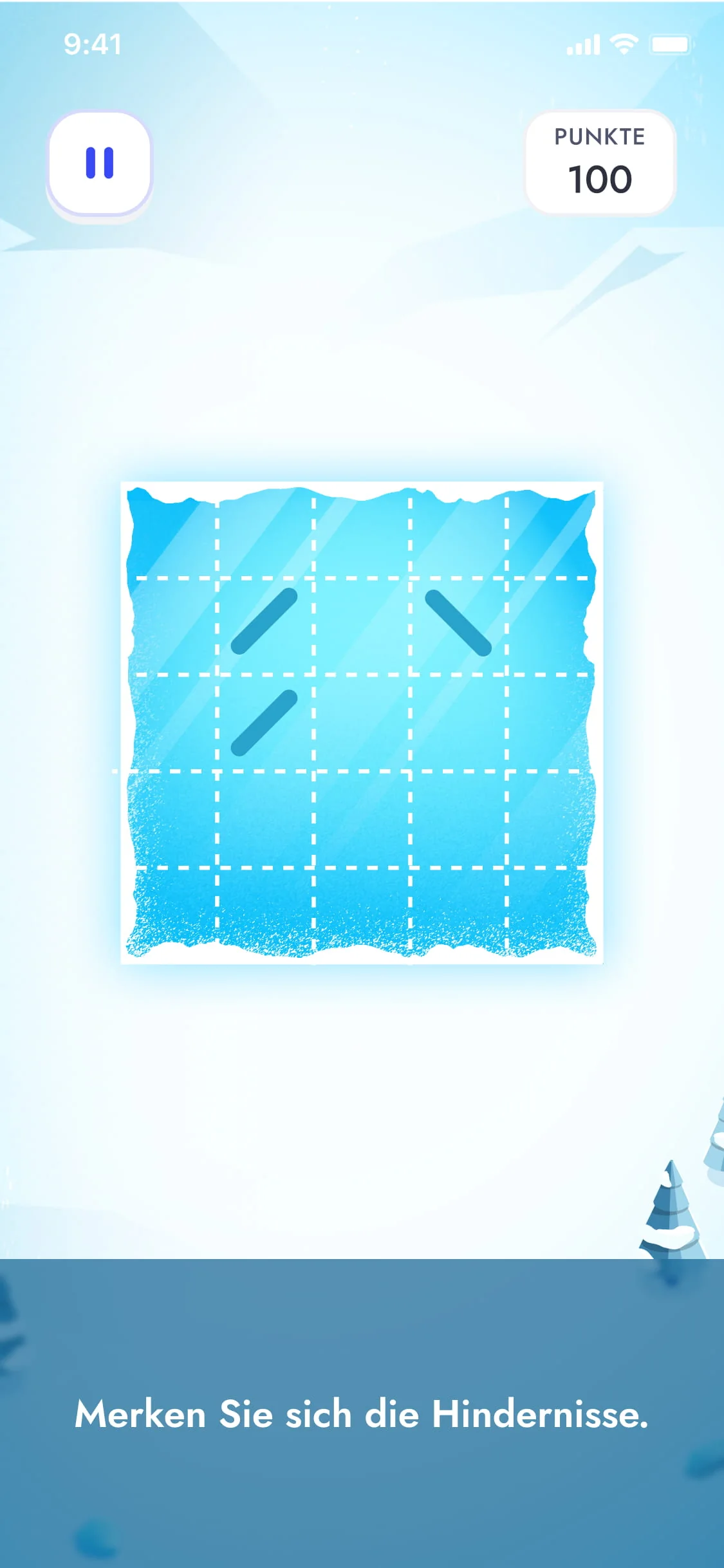
Tasks that call for quick recognition and sorting. The difficulty only rises as far as suits you.
New things stick less well: arrangements, appointments or what was just said.
How you practise with myReha
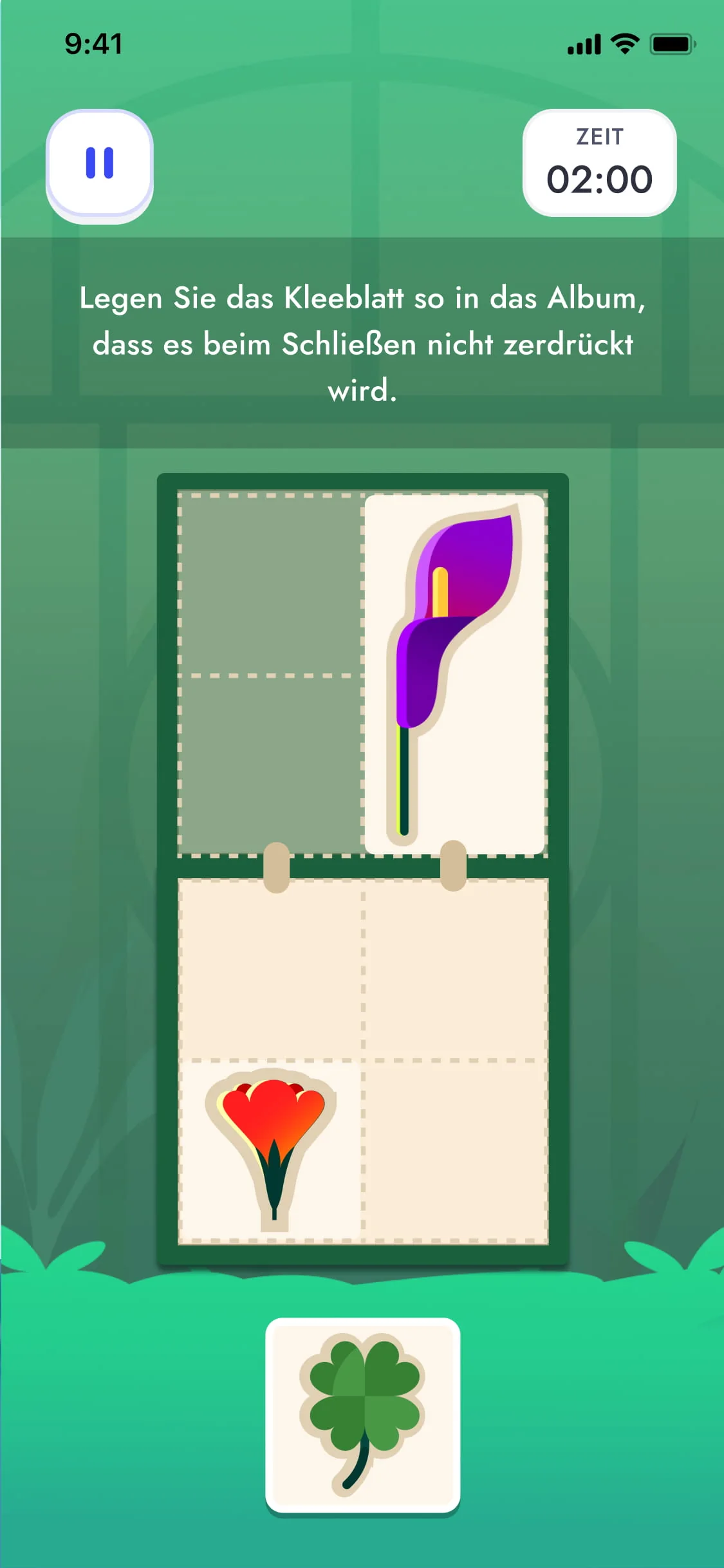
Memory tasks in small steps: take in, keep, repeat.
Structuring the day, getting started, staying with it: what used to happen on the side now takes effort.
How you practise with myReha
Tasks that call for thinking ahead: first consider, then act.
The right word is missing, and longer conversations are harder to follow.
How you practise with myReha
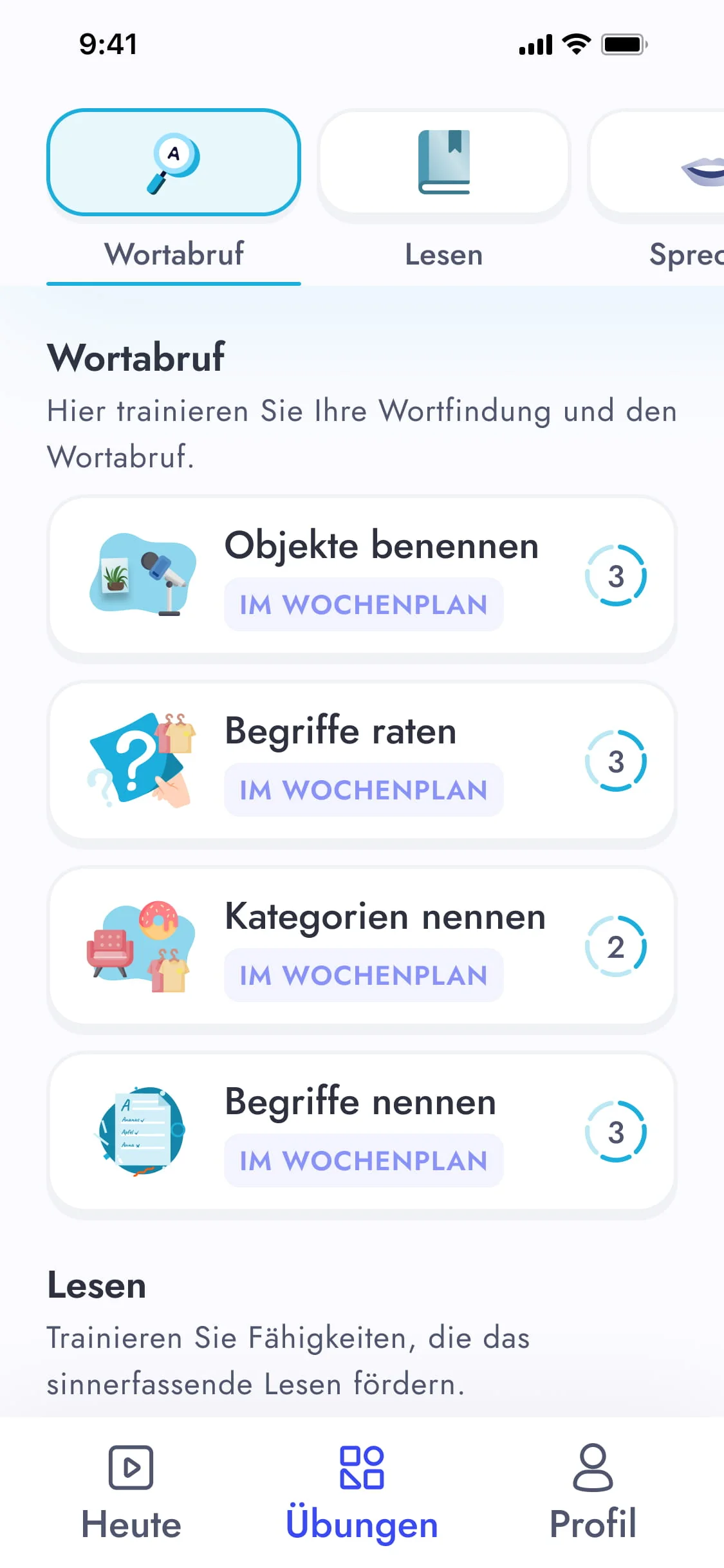
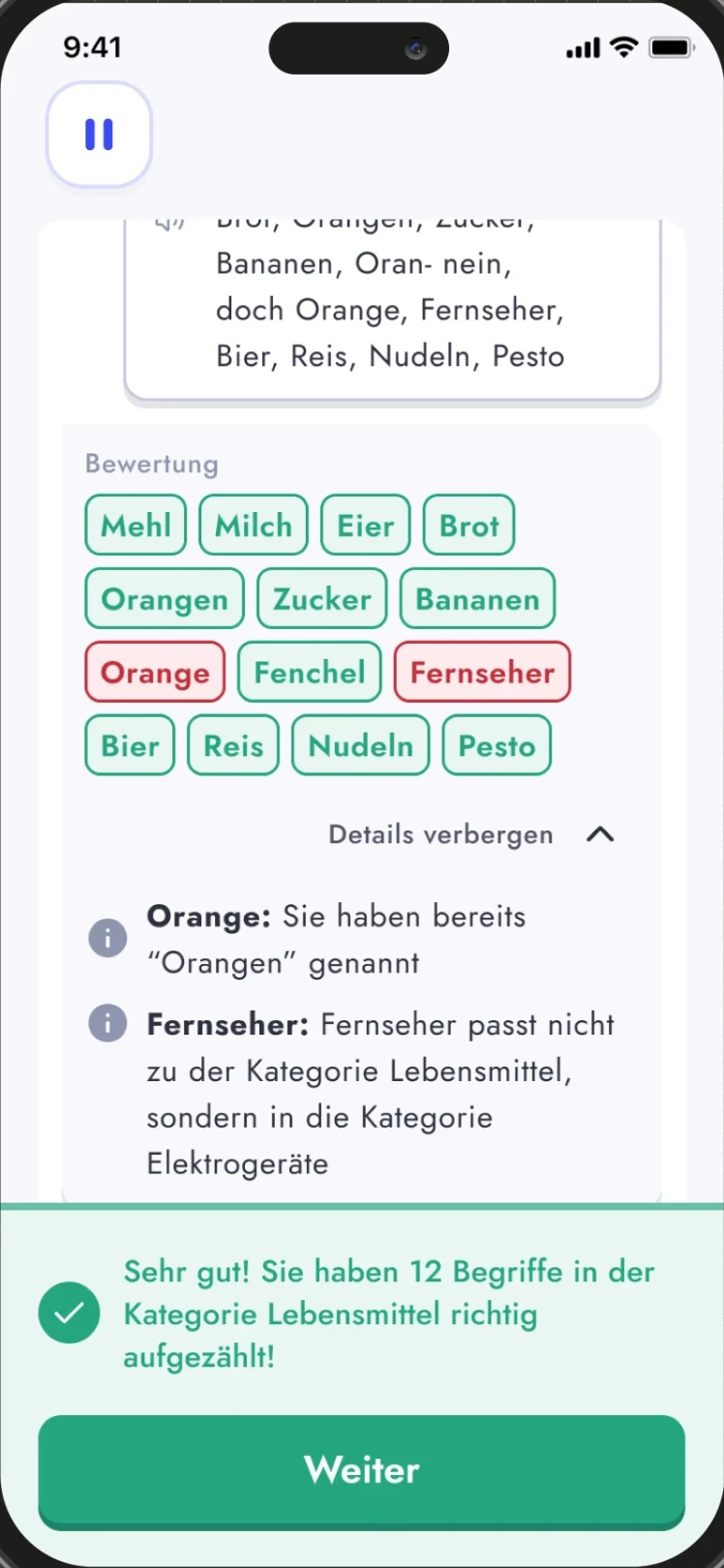
Naming objects, guessing terms, listing categories: you speak, and myReha recognises your answers.
After a severe injury, speech can be slurred or slowed.
How you practise with myReha
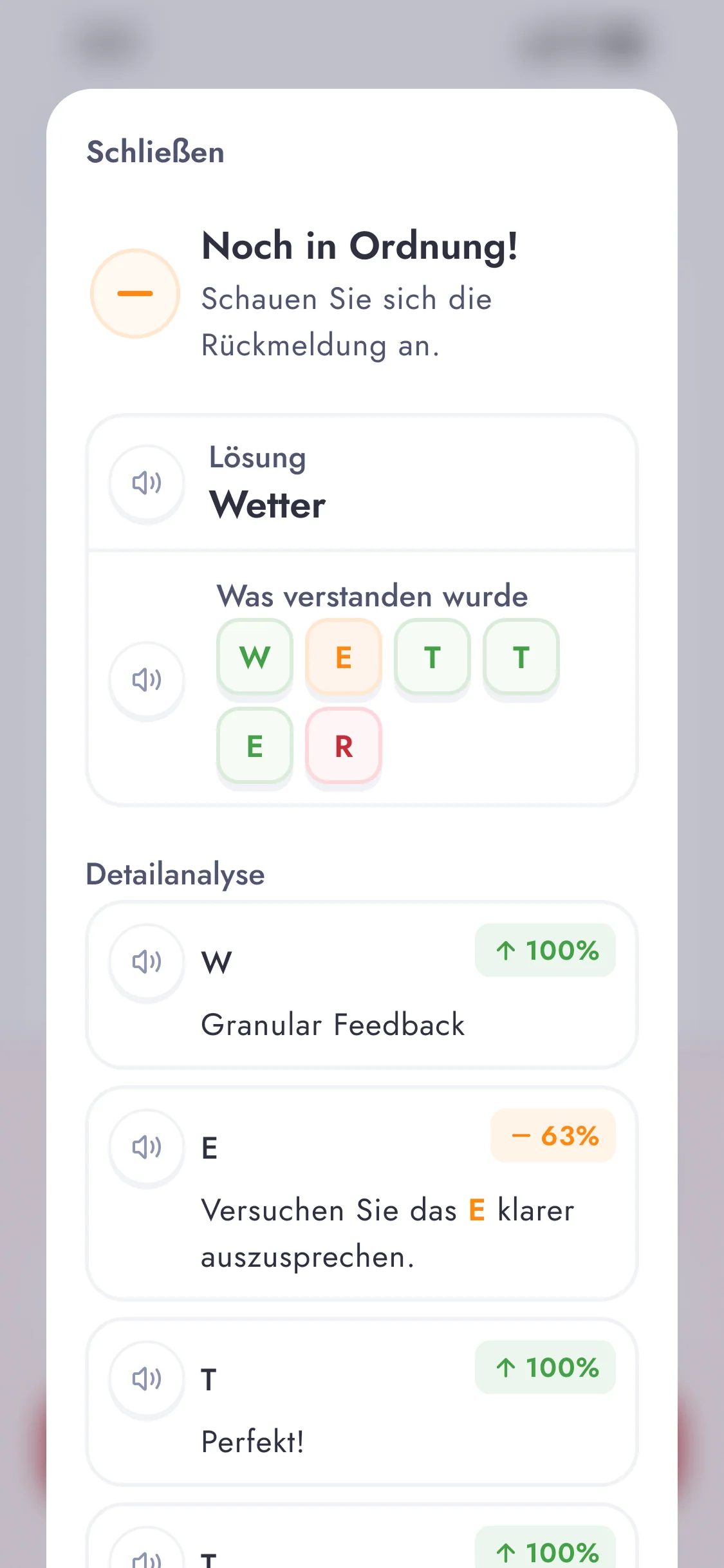
You say words and sentences aloud. myReha listens and shows, sound by sound, what was clear and what you can pronounce more clearly.
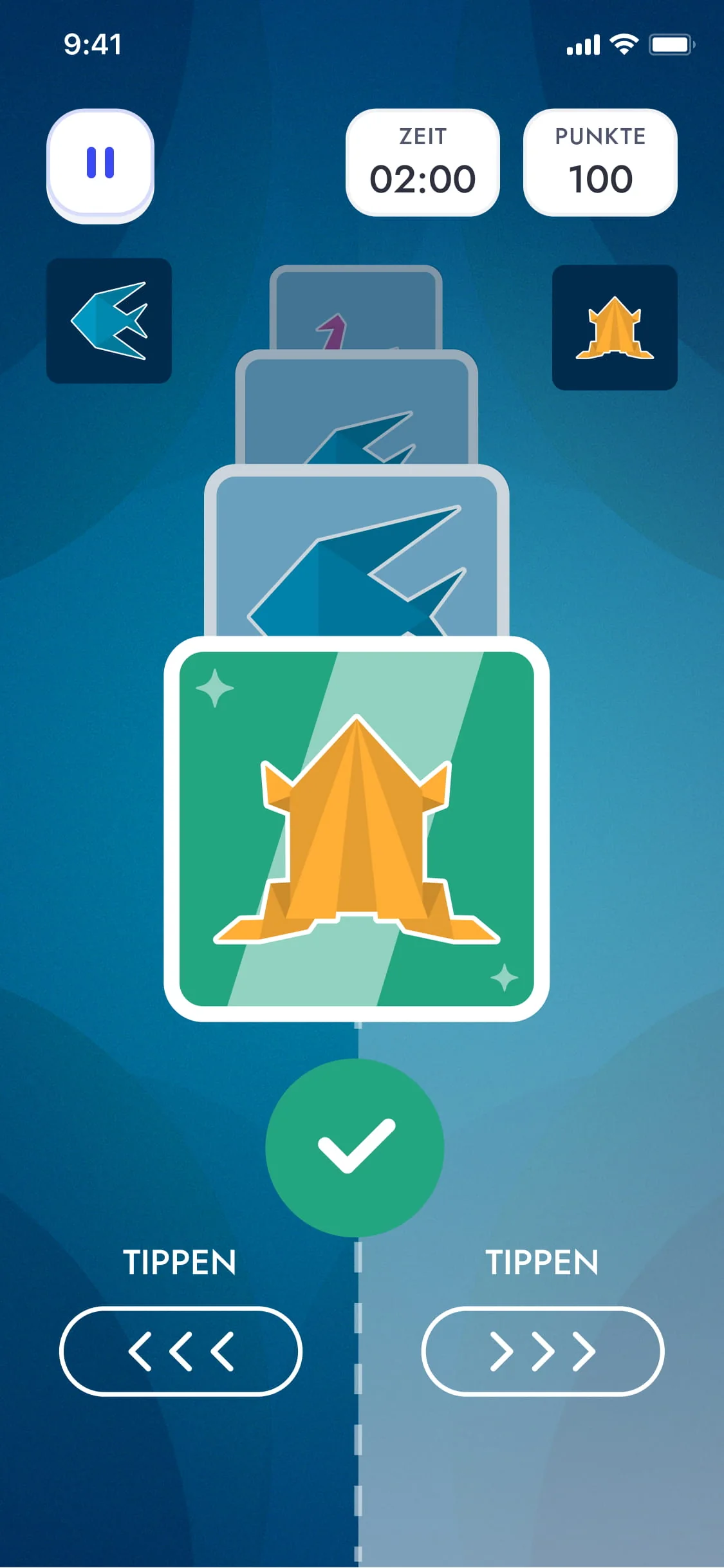
Speed and concentration
Noise, group conversations or doing two things at once quickly become too much. Concentration fades sooner.
How you practise with myReha
Tasks that call for quick recognition and sorting. The difficulty only rises as far as suits you.
Cognitive rehabilitation after a brain injury is well studied. Guidelines recommend targeted training, ideally guided and close to everyday life.
Recovery rests on nerve networks rebuilding themselves. Specialists assume that targeted practice influences this rebuilding.
For attention disorders, the German guideline says computer-based methods should be used. For planning, a second guideline recommends practice-based methods with the highest grade of recommendation.
Guidelines recommend exercises on a screen as part of therapy, with strategies for everyday life, and not as the only treatment. myReha adds to your therapy but does not replace it.
Sources: German S2e guideline on traumatic brain injury in adults, DGNC 2015. German S2e guideline on attention disorders, DGN and GNP 2023. German S2e guideline on executive dysfunction, DGN and GNP 2019. Cicerone et al., Archives of Physical Medicine and Rehabilitation 2019. INCOG 2.0, Journal of Head Trauma Rehabilitation 2023.
Searching in a targeted way and tuning out distractions calls on attention, which often suffers after a traumatic brain injury. myReha adapts every task to the last one. Try it.
Difficulty
A sample task for this page. In the app you will find more than 100,000 tasks with pictures, speech and sound.
1 / 3
Find all the blue circles.
0 / 3
Tap every blue circle. Other shapes and colours do not count.

After a traumatic brain injury, more often changes than can be seen. Relatives are usually the first to notice.
Put changes in context.
Irritability, lack of drive or forgetfulness can be consequences of the injury. They are not intentional.
Dose the stimuli.
A quiet setting, one thing at a time and fixed routines take pressure off attention and memory.
Look after yourself.
Supporting someone takes strength. Get support for yourself, for example from an advice centre or a self-help group.
With many health insurers, myReha is free for you. The check shows in a few steps whether that applies to your diagnosis.
€0
instead of €349.99, for six months
from€58.33
per month, the first 7 days free
The subscription renews automatically and can be cancelled at any time, effective at the end of the term.
€0
to get to know myReha
Your health insurer isn't a partner? More and more insurers cover the cost on request. How to apply.
Most of the recovery happens in the first two years. But studies show that abilities practised in a targeted way, such as attention, can still improve more than a year after the injury. How much of that lasts in everyday life is not yet settled.
No. In the first one to two days the brain needs rest, with few stimuli and little screen time. After that you raise the load step by step. myReha is not meant for a concussion that clears up without consequences. It is for people whose attention, memory or language stay limited for longer.
Practise briefly, take breaks and stop when symptoms increase. Several short sessions are better than one long one. If headaches, dizziness or tiredness clearly increase, talk to your doctor.
If the injury was only a short time ago, if symptoms are increasing or if you have had epileptic seizures since the injury. Worsening headaches, repeated vomiting, marked drowsiness or vision problems after a head injury are an emergency: call 112.
No. Guidelines recommend exercises on a screen as part of therapy and not as a replacement. Agree with your therapist what you practise at home and how you carry it over into everyday life.
myReha has so far been studied mainly with people after a stroke. People with traumatic brain injury took part in the studies, but in small numbers: in an observational study with 195 rehab patients it was about 6%. Results were not analysed separately.
On iPhone and iPad from iOS 16 and on Android devices from Android 6. The display is larger on a tablet. You need an internet connection.
No. With many partner insurers myReha is free without a prescription. Under "Check coverage" you can see in a few steps whether your insurer takes part.
Create an account. Tell us briefly what your goal is.
Sort out the cost. We show you whether your insurer covers it.
Get going. Sign in to the app and start.
Are you a therapist or do you work in a clinic?