



nyra health
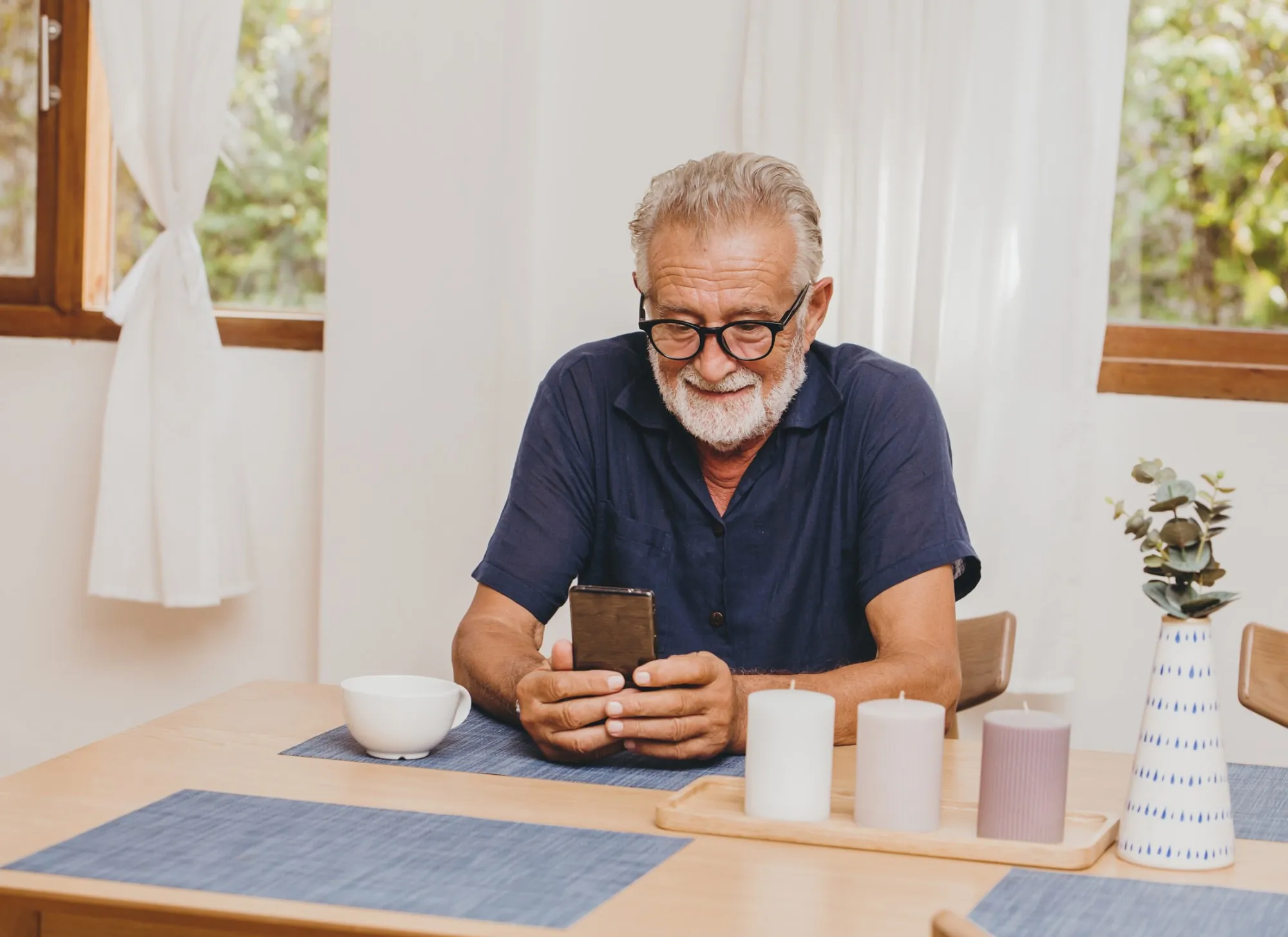
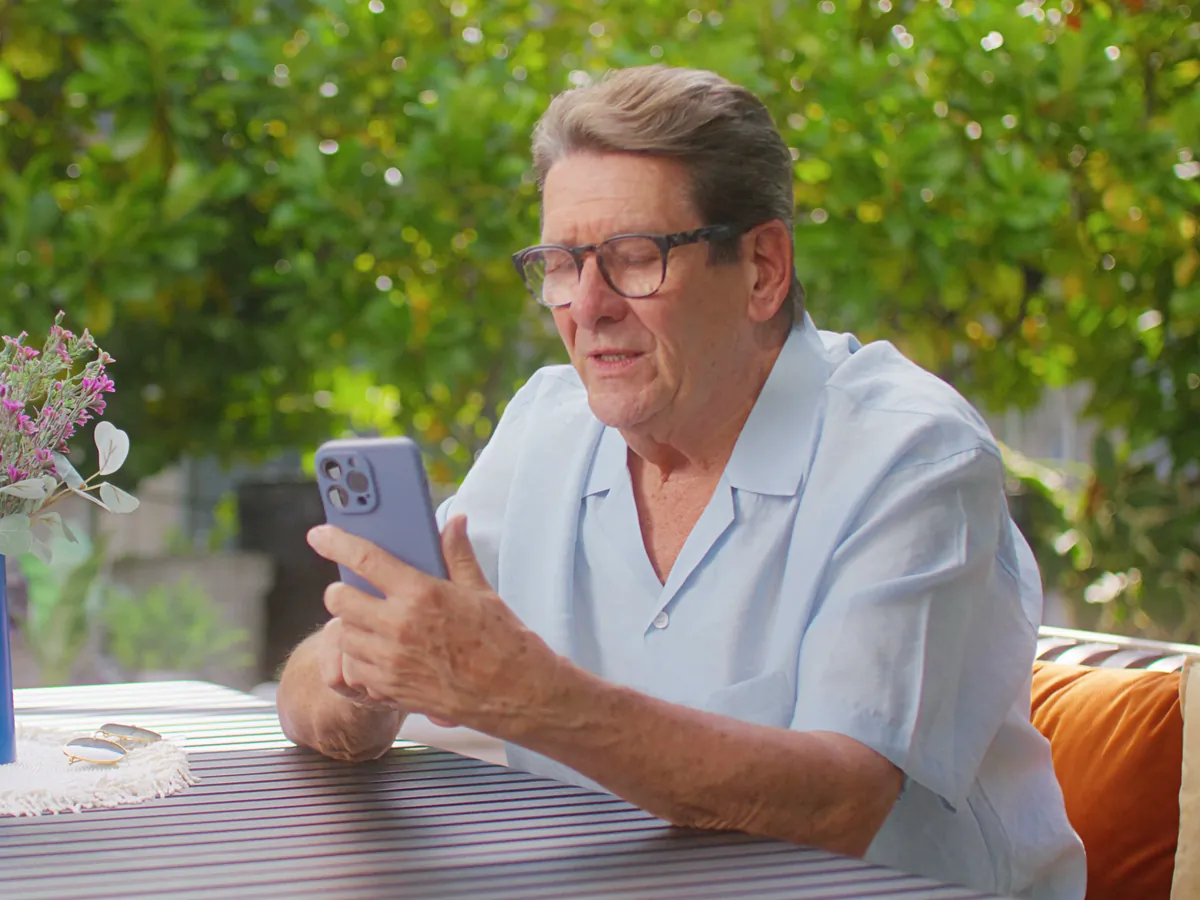
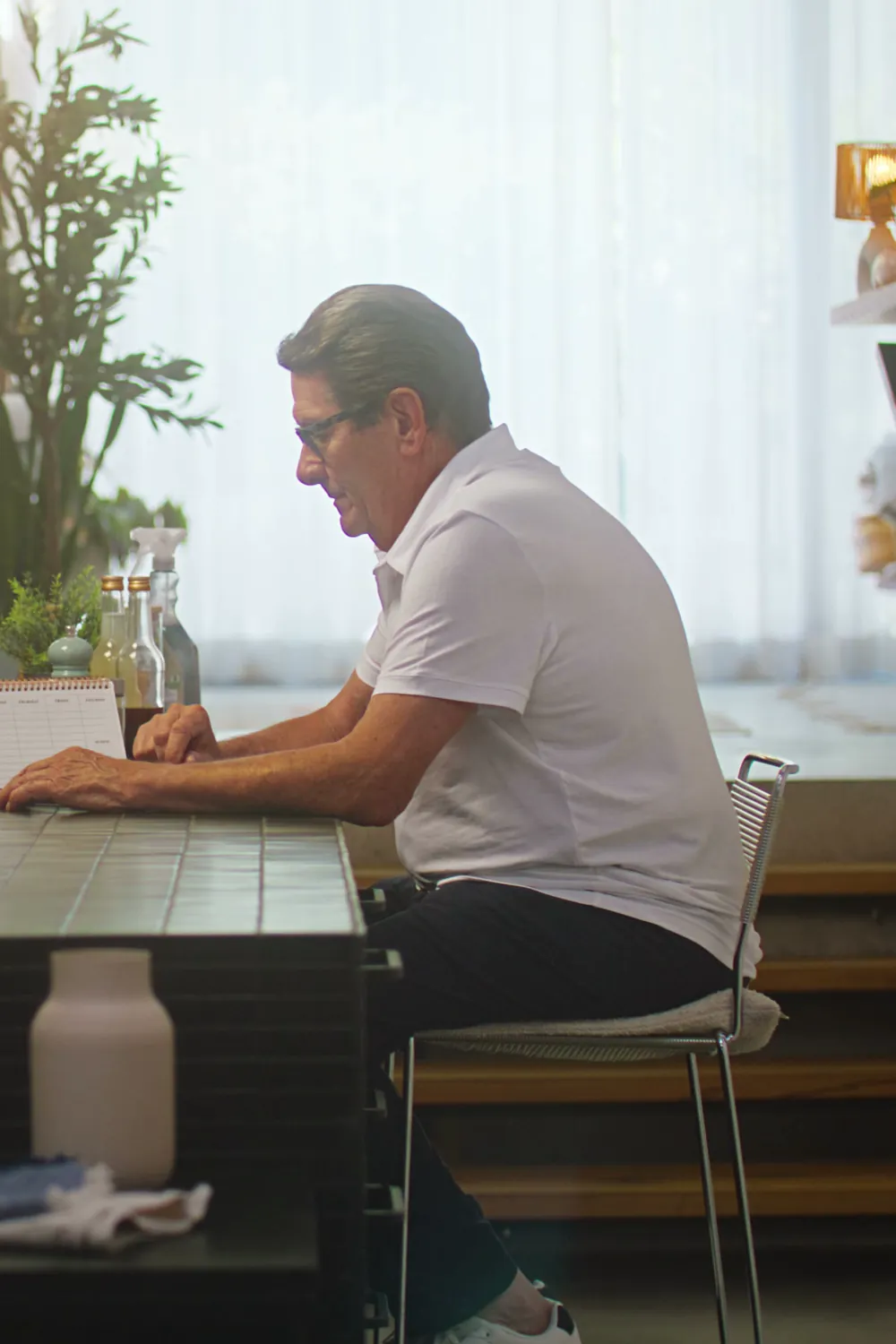
An older man smiles at his dining table as he practises on his smartphone.

After a stroke: Step by step back into everyday life.

What happens now, how things continue after the clinic and how you can keep practising at home every day.

After a stroke, the brain can learn again. That takes practice, at home too.

  • 270,000

    strokes a year in Germany

  • almost 200,000

    of them are first strokes

  • 30%

    have aphasia after a first stroke

Source: Stiftung Deutsche Schlaganfall-Hilfe

What happens in a stroke.

In a stroke, part of the brain suddenly stops getting enough blood. Without oxygen, nerve cells there die. Which abilities become harder afterwards depends on where in the brain this happens and how large the affected area is.

  • about 80%

    Ischaemic stroke

    A blood clot blocks a vessel in the brain.

  • about 20%

    Brain haemorrhage

    A vessel in the brain bursts, and the blood presses on the surrounding tissue.

Which area does what.

Tap an area. The effects of a stroke depend on where it happens and how large the affected area is.

Choose a hemisphere

Controls the right side of the body

Broca's and Wernicke's areas

Language areas

Responsible for

In most people they sit in the left hemisphere: Broca's area in the frontal lobe for speaking, Wernicke's area in the temporal lobe for understanding.

Possible after a stroke

  • Aphasia: finding words, speaking, understanding, reading or writing become hard
  • Thinking usually stays intact; it is the route to language that is disturbed

Simplified view: many abilities come from several areas working together, and every stroke is different.

Sources: MSD Manual, brain damage by region (2025); Kenhub, anatomy of the cerebellum and brainstem. Illustration: Magnific.

The journey after a stroke.

Recovery starts in the clinic and continues at home. This is what the path looks like for many people in Germany. How long each phase takes varies a lot.

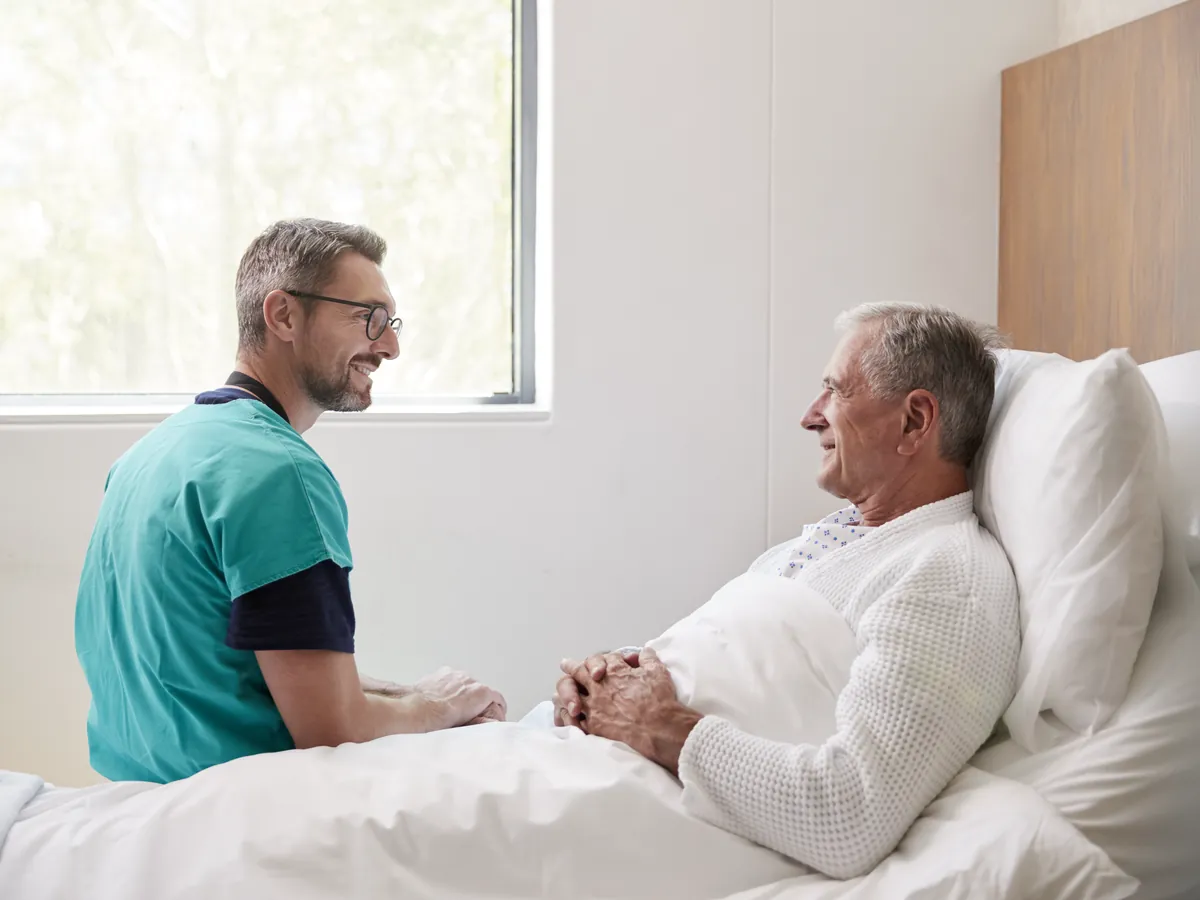
  1. A doctor talks with an older patient in a hospital bed.

    1 · The first days

    Emergency department and stroke unit

    Doctors find out what kind of stroke it is and treat it as fast as possible. On the stroke unit you are monitored, and the first therapy begins.

    Neurology, nursing, first therapy
  2. A physiotherapist helps an older man walk with a walker.

    2 · Days to weeks

    Early rehabilitation

    People who are still severely affected keep being treated in the clinic. Step by step, movement, swallowing, speech and orientation come back.

    Doctors, nurses, therapists
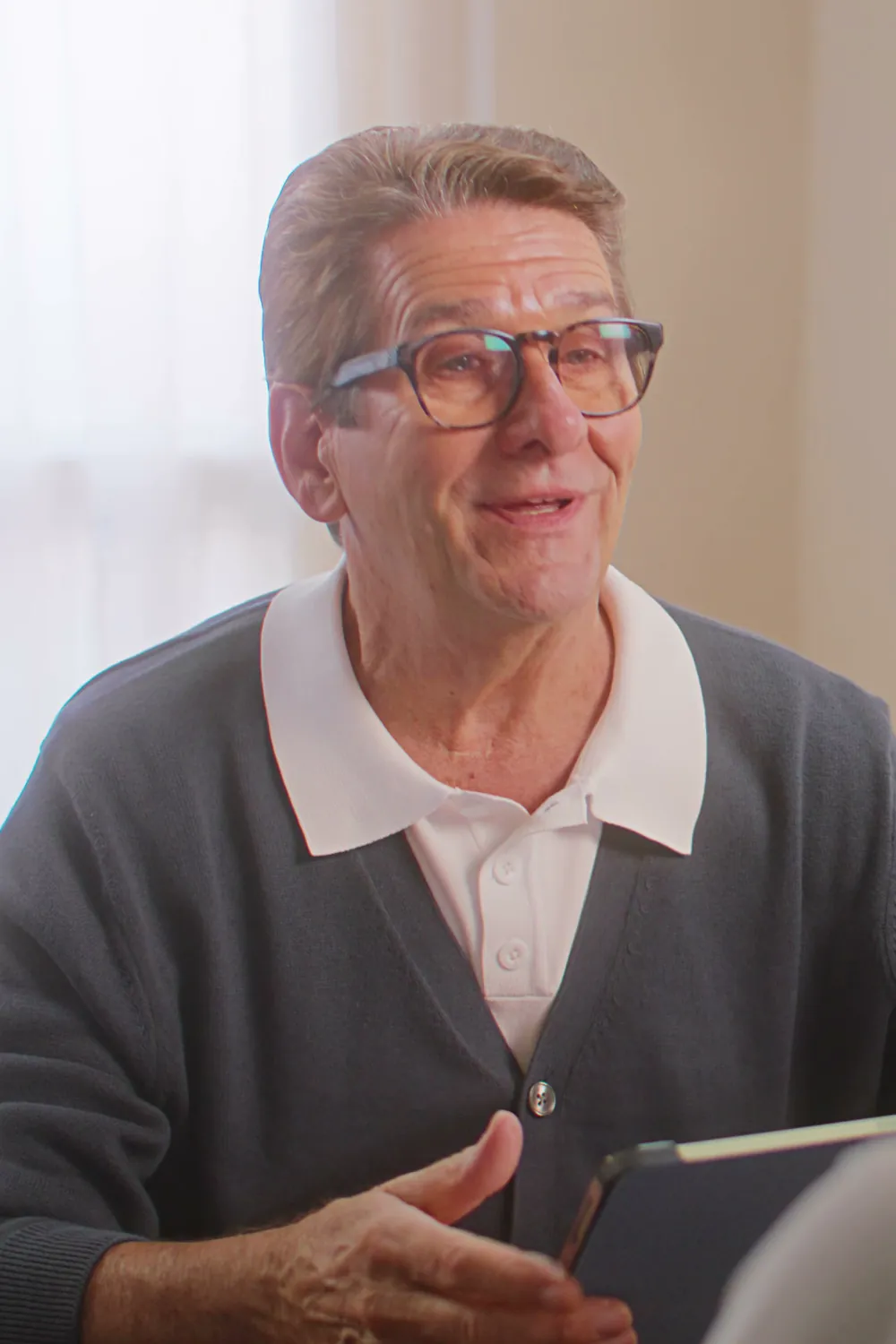
  3. An older man talks with his therapist in a session, a tablet in his hand.

    3 · Usually a few weeks

    Rehab in the clinic

    In rehabilitation you practise every day in speech therapy, occupational therapy, neuropsychology and physiotherapy. Many clinics already use myReha.

    The rehab clinic's therapy teammyReha in the clinic
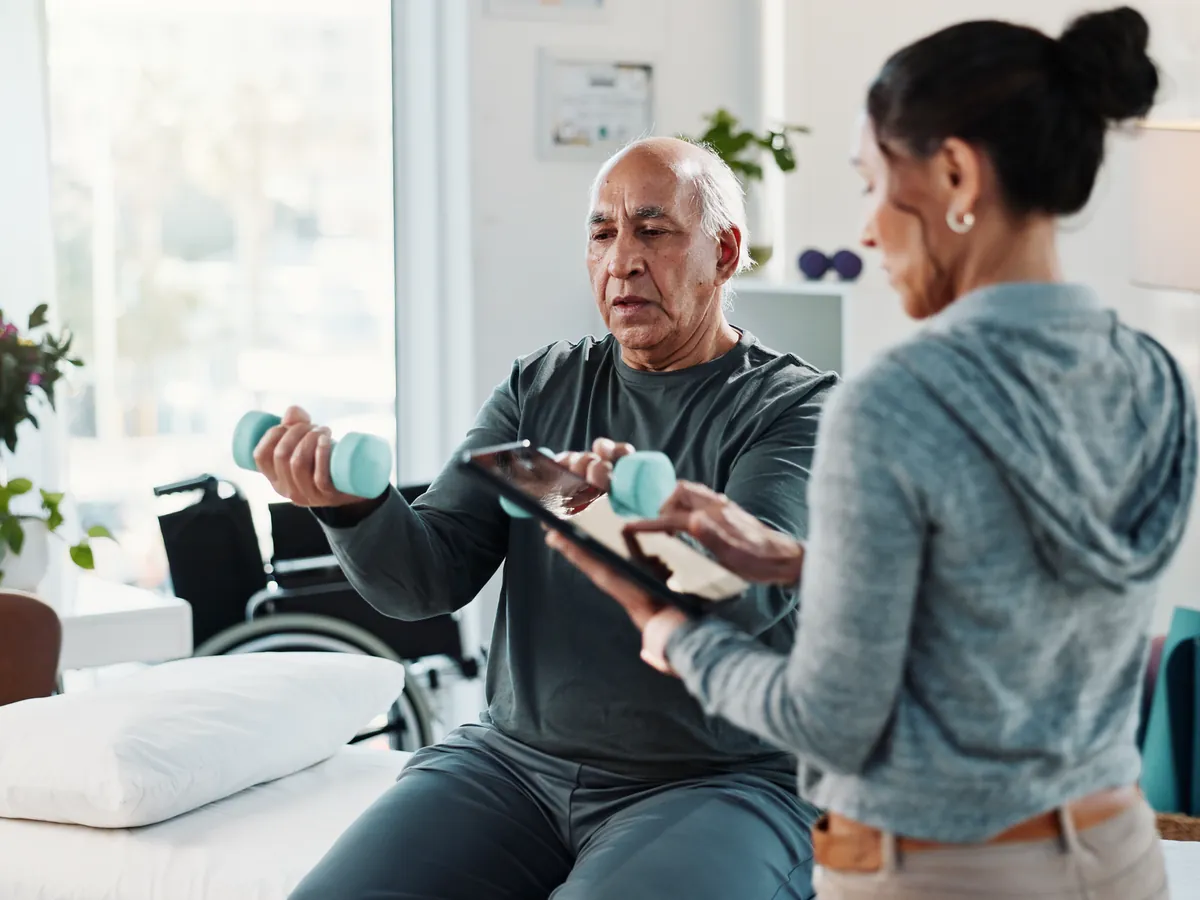
  4. A therapist shows an older woman an exercise on a tablet.

    4 · After discharge

    Aftercare and therapy in a practice

    At home, therapy continues in a practice, often with one or two appointments a week. People of working age can get rehab aftercare from the pension insurance, also digitally with myReha.

    Practices for speech therapy, occupational therapy and neuropsychologymyReha in DRV aftercare
  5. An older man practises with the myReha app on his smartphone in the garden.

    5 · Months and years

    Back in everyday life

    Recovery continues, even long after the stroke. What counts now is practising regularly, taking on everyday tasks again step by step and, where possible, returning to work.

    You, your family, your practicemyReha at home
After discharge things often get quieter, even though the brain keeps learning. That is exactly when practising every day helps.

What can be hard now.

Not every after-effect is visible. Many people struggle after a stroke with things others hardly notice. These are the most common ones, and this is how you can practise them.

  • An older man talks with his therapist.

    Language

    With aphasia and speech disorders, you practise:

    • Finding words
    • Understanding
    • Reading
    • Writing
    • Speaking clearly
  • An older man solves an exercise on a tablet.

    Memory and concentration

    When remembering and staying focused are hard, you practise:

    • Attention
    • Staying focused
    • Remembering new things
    • Keeping a shopping list in mind
    • Recognising faces
  • An older man writes at his kitchen table.

    Planning and orientation

    For everyday routines, you practise:

    • Putting steps in order
    • Solving problems
    • Arithmetic
    • Searching and finding
    • Keeping both sides in view

Each after-effect in detail

  • Finding and understanding wordsAphasia

    The right word is on the tip of your tongue, conversations become tiring, reading and writing are hard.

    Why
    The language centres usually sit in the left half of the brain. If that area is affected, language is disturbed, not thinking.
    Who helps
    Speech therapy

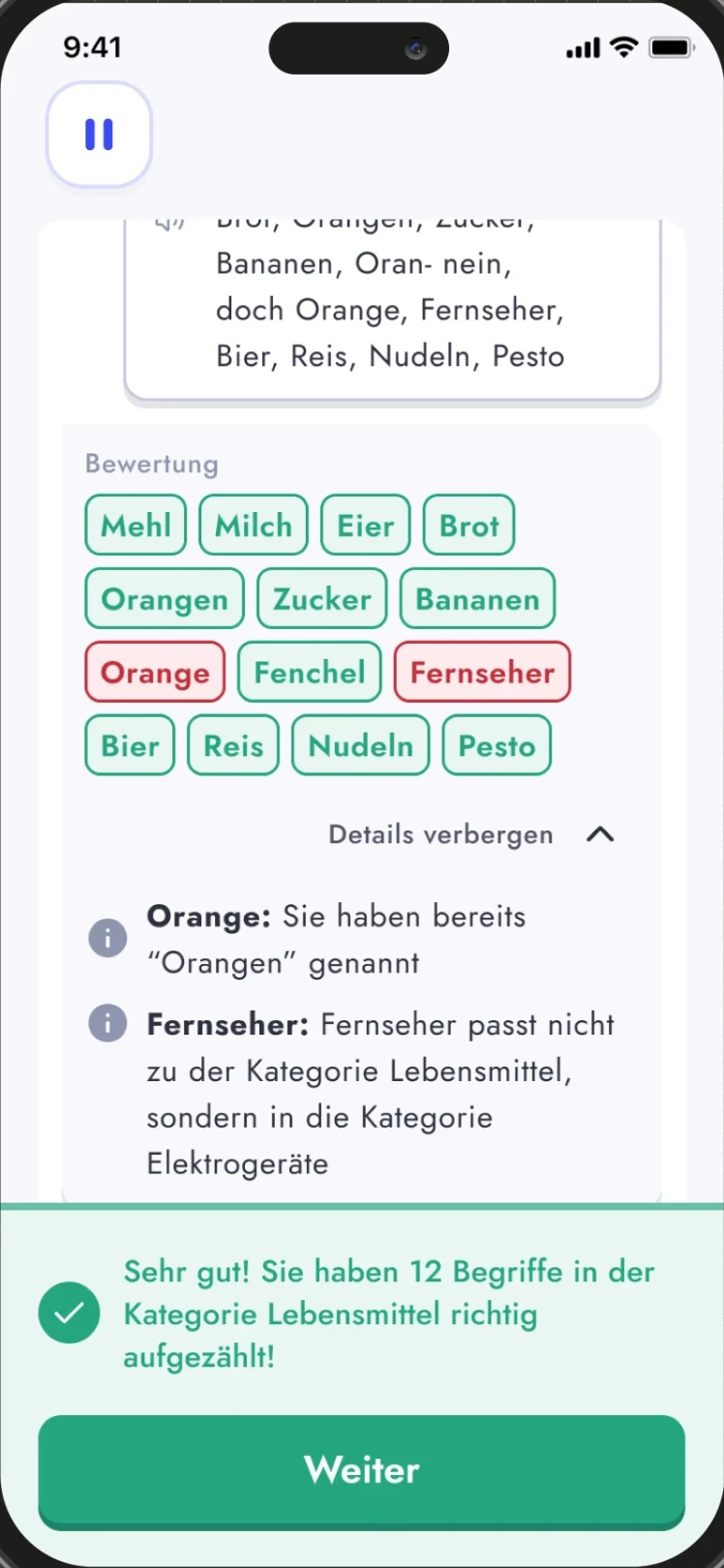
    How you practise with myReha

    Naming, understanding, reading and writing with pictures and everyday topics, with instant feedback.

  • Speaking clearlyDysarthria and apraxia of speech

    Speech sounds slurred, or the mouth cannot find the movement for a word.

    Why
    The control of the speech muscles or the planning of speech movements is disturbed.
    Who helps
    Speech therapy

    How you practise with myReha

    Say words and sentences out loud. myReha listens and shows what already sounds good.

  • Staying focusedAttention

    Concentration fades after a short time. Doing several things at once is hardly possible.

    Why
    After a stroke the brain needs more effort to filter stimuli and stay with one thing.
    Who helps
    Neuropsychology, occupational therapy

    How you practise with myReha

    Short tasks that demand attention and get longer and harder step by step.

  • RememberingMemory

    Appointments, names or what was just said are quickly gone.

    Why
    The networks that store new things and recall them are affected.
    Who helps
    Neuropsychology

    How you practise with myReha

    Memory tasks from everyday life, from the shopping list to faces.

  • Planning and doingExecutive functions

    Everyday routines like cooking or a bank transfer are hard, because the steps get mixed up.

    Why
    The frontal lobe controls planning, order and checking of actions.
    Who helps
    Occupational therapy, neuropsychology

    How you practise with myReha

    Solve tasks in the right order and tackle problems step by step.

  • Perceiving and finding your wayPerception

    Objects are hard to recognise, or one side of the room is overlooked.

    Why
    Especially after damage to the right half of the brain, attention to one side can be lost.
    Who helps
    Neuropsychology, occupational therapy

    How you practise with myReha

    Search and perception tasks that lead the eye across the whole screen.

Body and feelings change too. Paralysis, exhaustion and low mood are common after a stroke. myReha trains language and thinking. For movement, exhaustion and mood, physiotherapy, your doctor and psychotherapy are the right people to talk to. Speak openly about changes.

Why regular practice makes such a difference.

  1. 1

    The brain relearns.

    After a stroke, healthy areas can take over tasks. That takes repetition: what you practise often gets easier over time.

  2. 2

    Frequency counts.

    In a large study, intensive speech therapy of at least ten hours a week improved everyday communication, even long after the stroke.

  3. 3

    Practise between appointments.

    Therapy in a practice often takes place once or twice a week. With myReha you keep practising on the days in between, as often as feels right.

A week after rehab

  • Mon
  • Tue
  • Wed
  • Thu
  • Fri
  • Sat
  • Sun
Appointment in the practicePractising with myReha
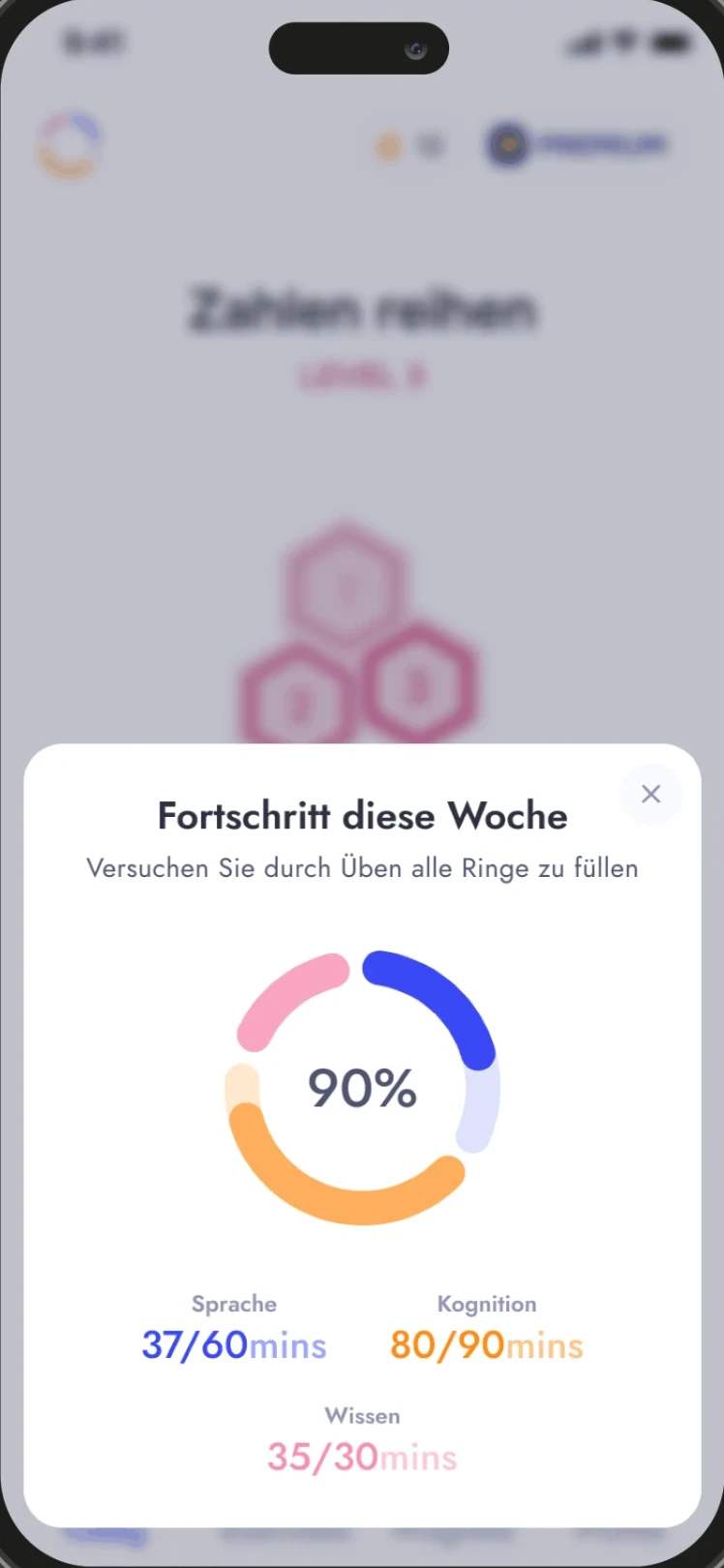
4 his how long patients practise with myReha per week on average in digital aftercare

Sources: Breitenstein et al., The Lancet 2017 (FCET2EC). Digital aftercare with myReha, Neurologie & Rehabilitation 2025.

How myReha works

Discover how myReha guides you step by step: with exercises that fit your abilities and goals.

1

Set your goals.

At the start, myReha asks about your personal goals and assesses your abilities with short tasks. This creates a therapy plan that suits you.

Back0/3

What do you want to get better at? Pick 3 or more.
  • Speak loud & clear
  • Find words
  • Talk freely & tell stories
  • Read & write
  • Stay alert & clear-headed
  • Remember & retain
  • Plan & organise everyday life
  • Understand connections
Continue
Back

  • Speak loud & clear+5 exercisesPronunciation · Speaking
  • Find words+6 exercisesWord finding · Speaking
  • Stay alert & clear-headed+5 exercisesAttention · Perception
Create my plan

2

Speak confidently.
With direct feedback.

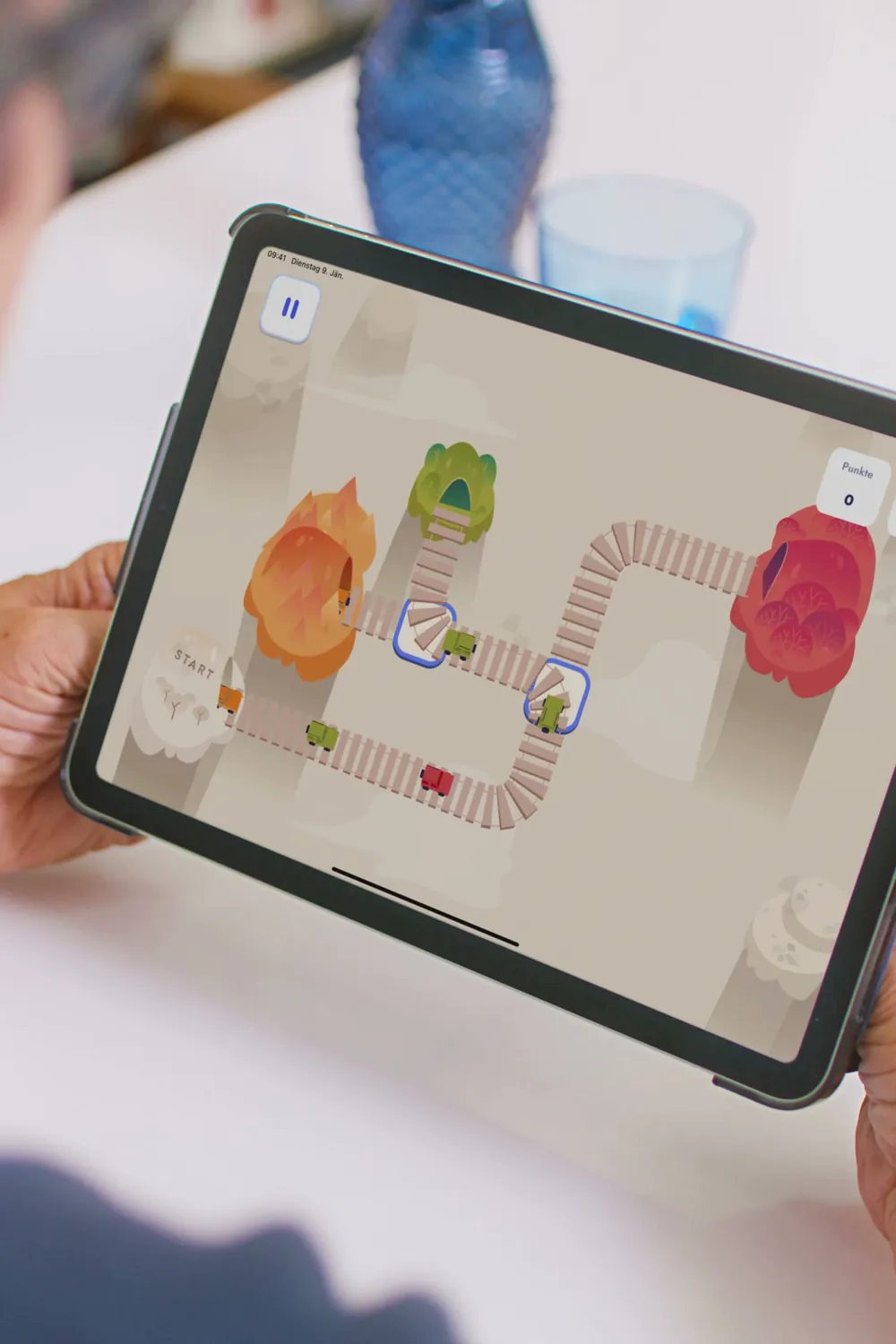
Find words, form sentences and practise conversations: with interactive speech exercises you can train easily from home. myReha listens and gives you feedback straight away.

3

Train memory, concentration and much more.

Whether remembering, calculating or attention: discover over 100,000 varied tasks that you can train at your own pace.

4

Your progress. Your therapy plan.

See what you have already achieved. myReha keeps adapting your exercises to your progress, so you are always challenged at the right level.

All the steps in detail

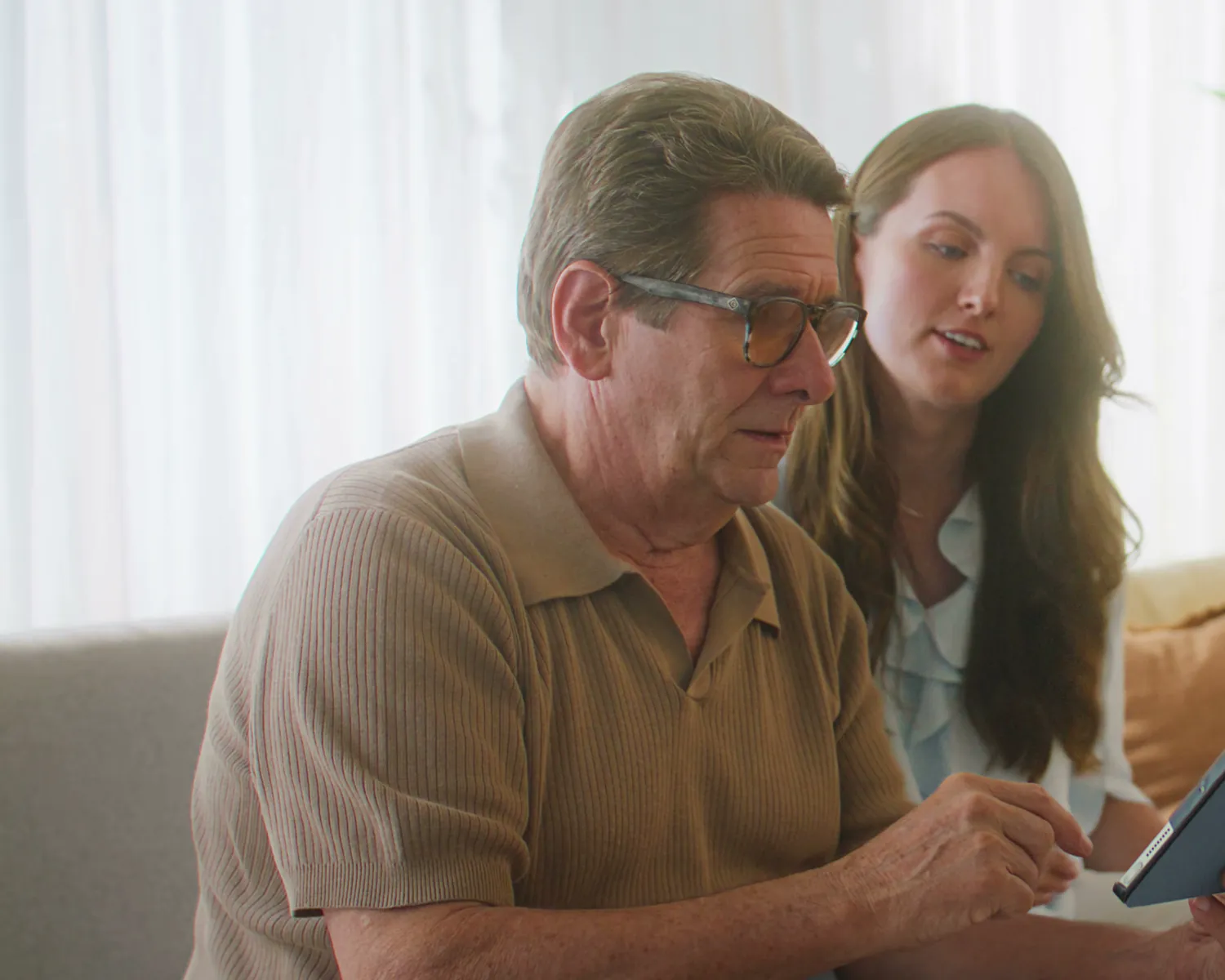
For relatives.

You can make a big difference: setting up the app, practising together and being patient when progress is slower. Seeing small successes motivates both of you.

Guide for relatives
A young woman helps her father practise on the tablet.

Research: clinical evidence

Clinically demonstrated: +80% more progress with myReha.Those who practise more with myReha make more progress.

myReha is a certified medical device, used in clinical care and scientifically studied.

TACTIC study

Randomized controlled trial, 12 weeks

Additional training with myReha led to significantly greater cognitive improvement than standard care alone.

Dose-response in routine care

Use in routine care

More therapy time, greater improvement in both domains.

TACTIC: Bloder et al., conference abstract 2025. Efficacy of an AI-Based Digital Neurorehabilitation Program: Results from a 12-Week Randomised Controlled Trial. All publications

What myReha costs.

With many health insurers, myReha is free for you. This is how you get started:

With your health insurer

€0

instead of €349.99, for six months

  • All Premium features
  • For people with statutory or private insurance at our partner insurers in Germany
  • Can then be extended through your insurer

Paying yourself

from€58.33

per month, the first 7 days free

  • 1 month€69.99 / month
  • 3 months€63.33 / month€189.99 in total
  • 6 months€58.33 / month€349.99 in total

The subscription renews automatically and can be cancelled at any time, effective at the end of the term.

Basic version

€0

to get to know myReha

  • Limited features
  • No payment details needed
  • Switch to Premium at any time

Your health insurer isn't a partner? More and more insurers cover the cost on request. How to apply.

Questions about stroke.

Start your therapy with myReha.

  1. 1

    Create an account. Tell us briefly what your goal is.

  2. 2

    Sort out the cost. We show you whether your insurer covers it.

  3. 3

    Get going. Sign in to the app and start.

Start for free

Are you a therapist or do you work in a clinic?