With your health insurer
€0
instead of €349.99, for six months
- All Premium features
- For people with statutory or private insurance at our partner insurers in Germany
- Can then be extended through your insurer


What happens in the nervous system in MS, why concentration, memory and speech can suffer too, and how you practise with myReha in short sessions.
MS looks different in every person. What many do not know: concentration, memory and speech can suffer too, and they can be trained.
over 280,000
people in Germany live with MS
20–40 years
is the age at which the disease usually begins
up to 2 in 3
develop cognitive impairment over time
Sources: Deutsche Multiple Sklerose Gesellschaft (DMSG, 2026). German S2k guideline on multiple sclerosis, DGN (2026). Holstiege et al., Multiple Sclerosis and Related Disorders 2022.
Multiple sclerosis (MS) is a chronic inflammation of the brain and spinal cord. The immune system mistakenly attacks the protective sheath around the nerve fibres, the myelin.
Signal
Myelin wraps the nerve fibre like the insulation around a cable. Signals travel fast and arrive in full.
The sheath insulates the nerve fibres. With it, a fibre carries signals about ten times faster than without.
Immune cells turn against the body's own myelin. Areas of inflammation form, in many places and at different times. Hence the name: multiple sclerosis, many scars.
The body can rebuild myelin. Over the years, though, scars remain, and the nerve fibres themselves are damaged too.
Simplified view. Sources: gesund.bund.de (German Federal Ministry of Health, 2023); patient guideline on multiple sclerosis, DGN (2022); DMSG; Lubetzki et al., Lancet Neurology 2020.
Specialists distinguish three courses. Which one you have decides the treatment. You can practise in each of them.
After each relapse, part of the symptoms recede. Some can remain.
about 85%
start with this form
Symptoms come in relapses: they develop over hours to days, last at least 24 hours and then recede fully or in part.
What this means for practice
Practise regularly in quiet phases. During a relapse, training may pause: agree with your care team when to start again.
Schematic view. Sources: patient guideline on multiple sclerosis, DGN (2022); German S2k guideline on multiple sclerosis, DGN (2026); DMSG.
Which symptoms appear depends on where in the nervous system the inflammation sits. Much of it cannot be seen from the outside.
Lesions in the cerebrum can slow thinking down. People need longer to process information and tire more quickly.
This is where movement is fine-tuned. Lesions can make speech sound slurred or choppy and disturb balance.
Inflammation of the optic nerve is among the common first signs of MS. Usually one eye is affected.
The pathways to the arms, legs and bladder run through the spinal cord. Lesions disturb sensation and strength.
You can practise these with myReha
Simplified view. Sources: German S2k guideline on multiple sclerosis, DGN (2026); DMSG; Benedict et al., Lancet Neurology 2020.
myReha is a therapy app with more than 100,000 tasks for speaking, language and thinking. You practise at home whenever it suits you, and every task adapts to your level.
Group conversations, reading or working at a screen take more effort. Thinking takes longer.
How you practise with myReha
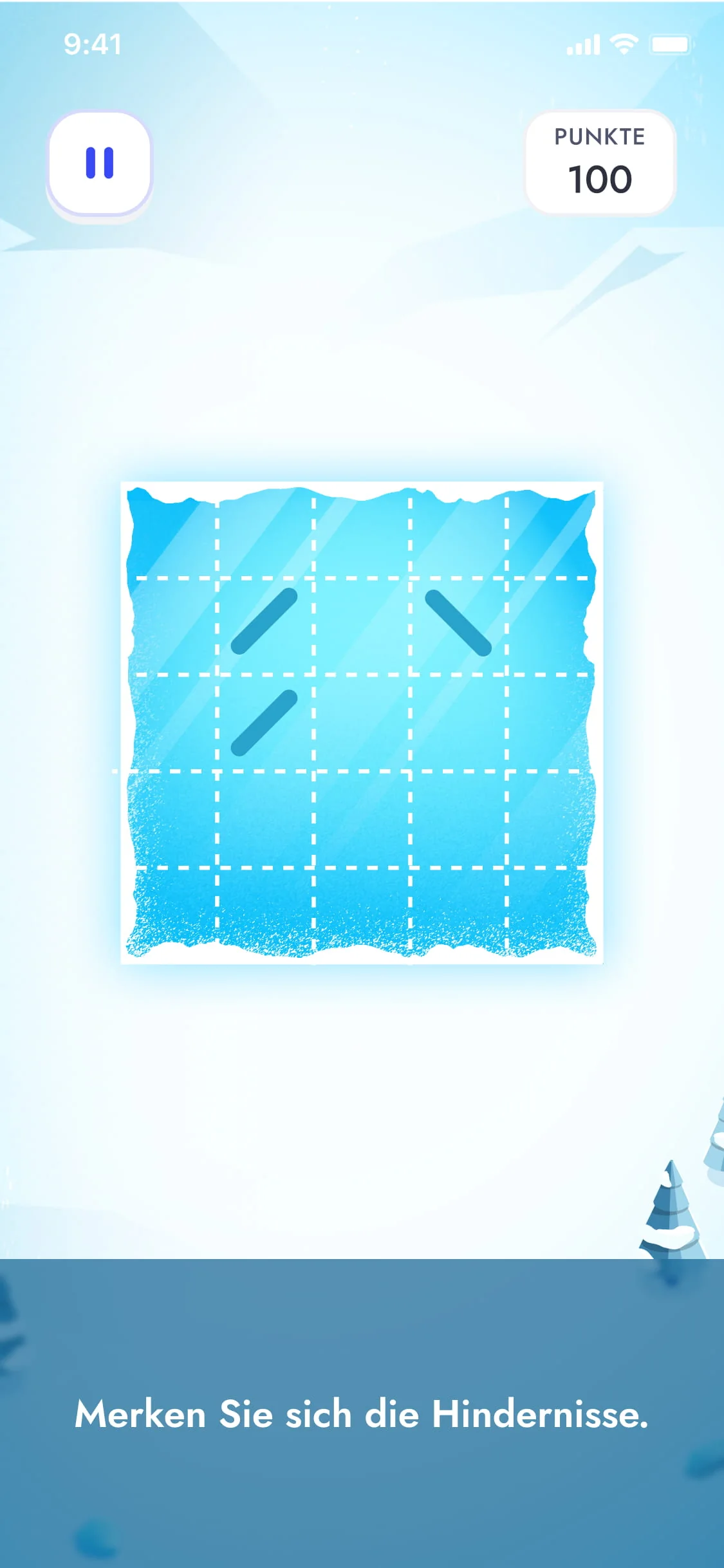
Tasks that call for quick recognition and sorting. The difficulty only rises as far as suits you.
New things stick less well: appointments, names or what you were just about to do.
How you practise with myReha
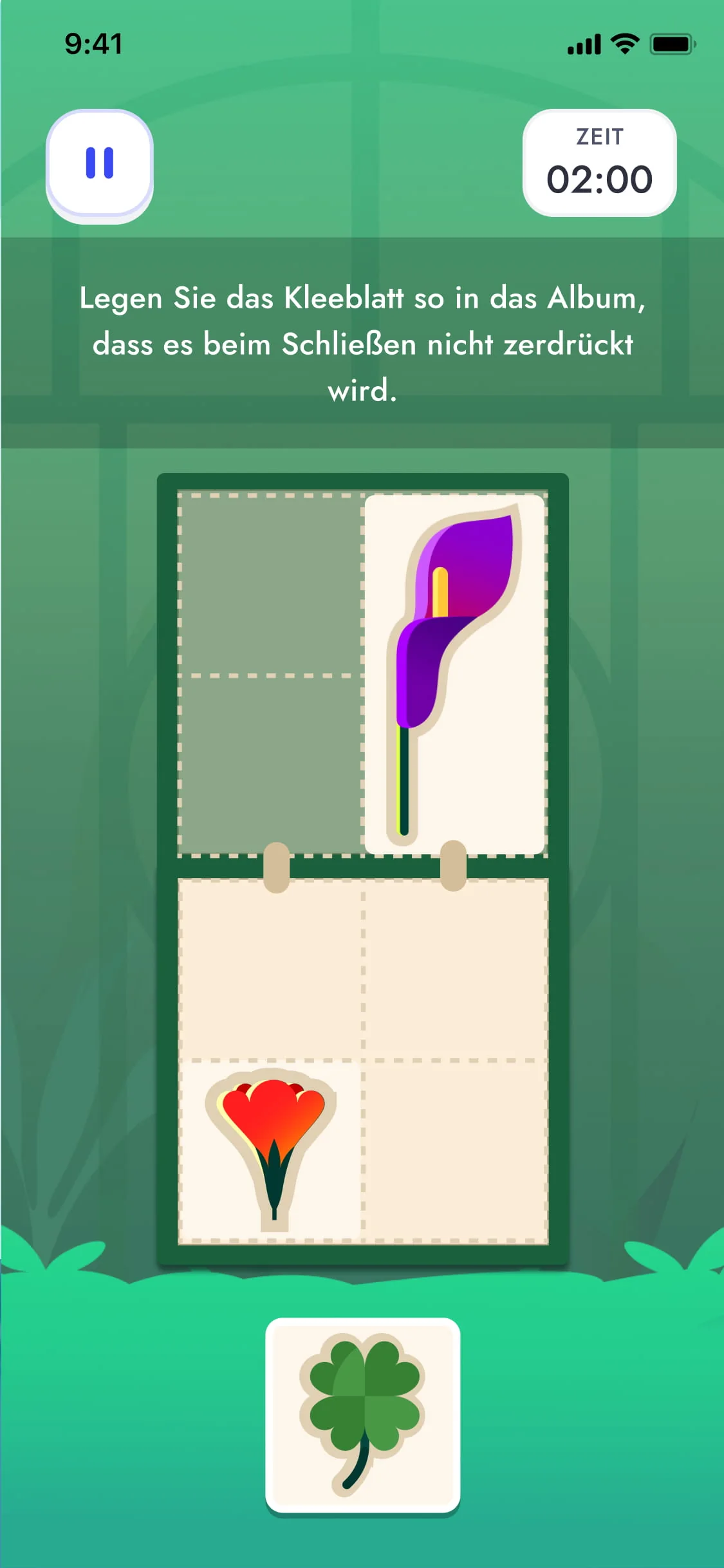
Memory tasks in small steps: take in, keep, repeat.
Keeping several things in view at once gets harder, at work and at home.
How you practise with myReha
Tasks that call for thinking ahead: first consider, then act.
The right word is on the tip of your tongue and will not come.
How you practise with myReha
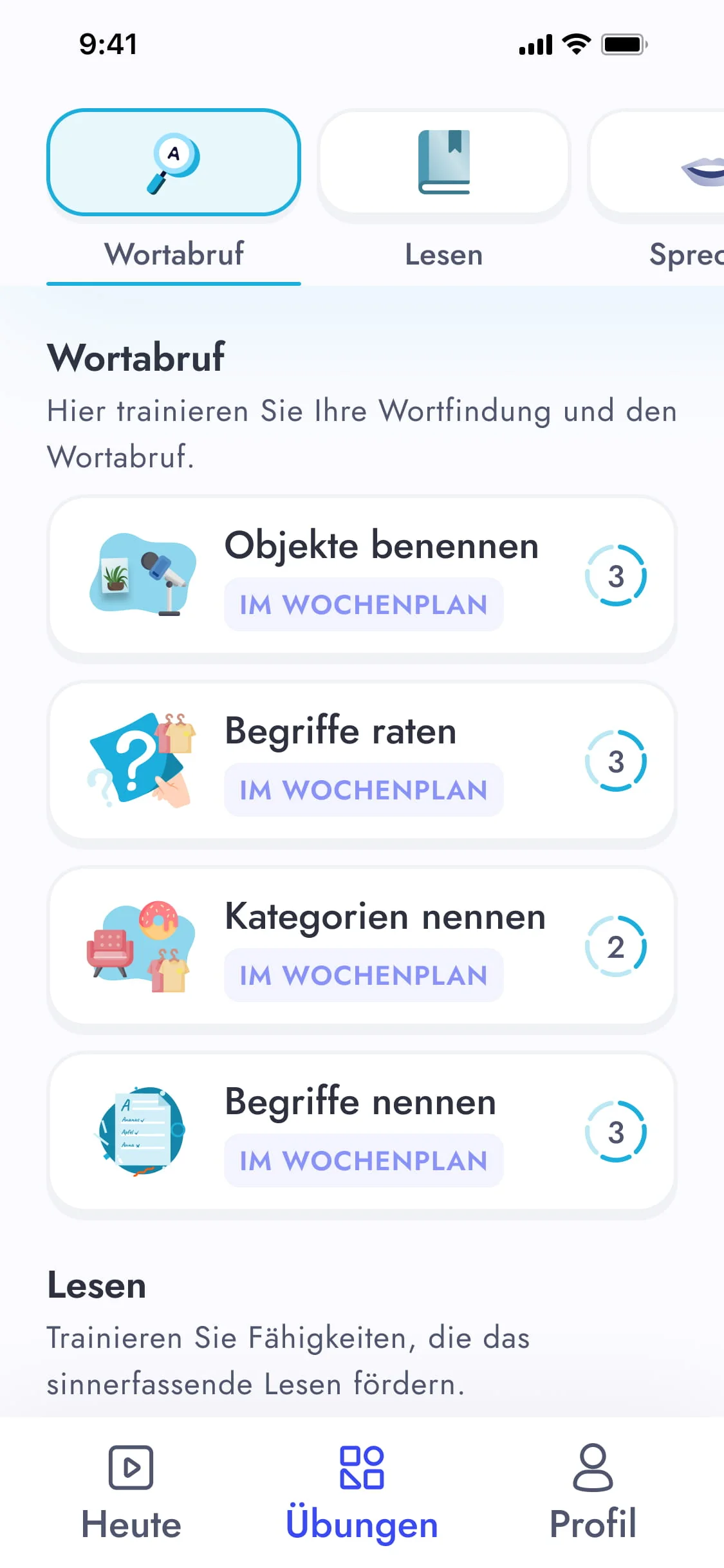
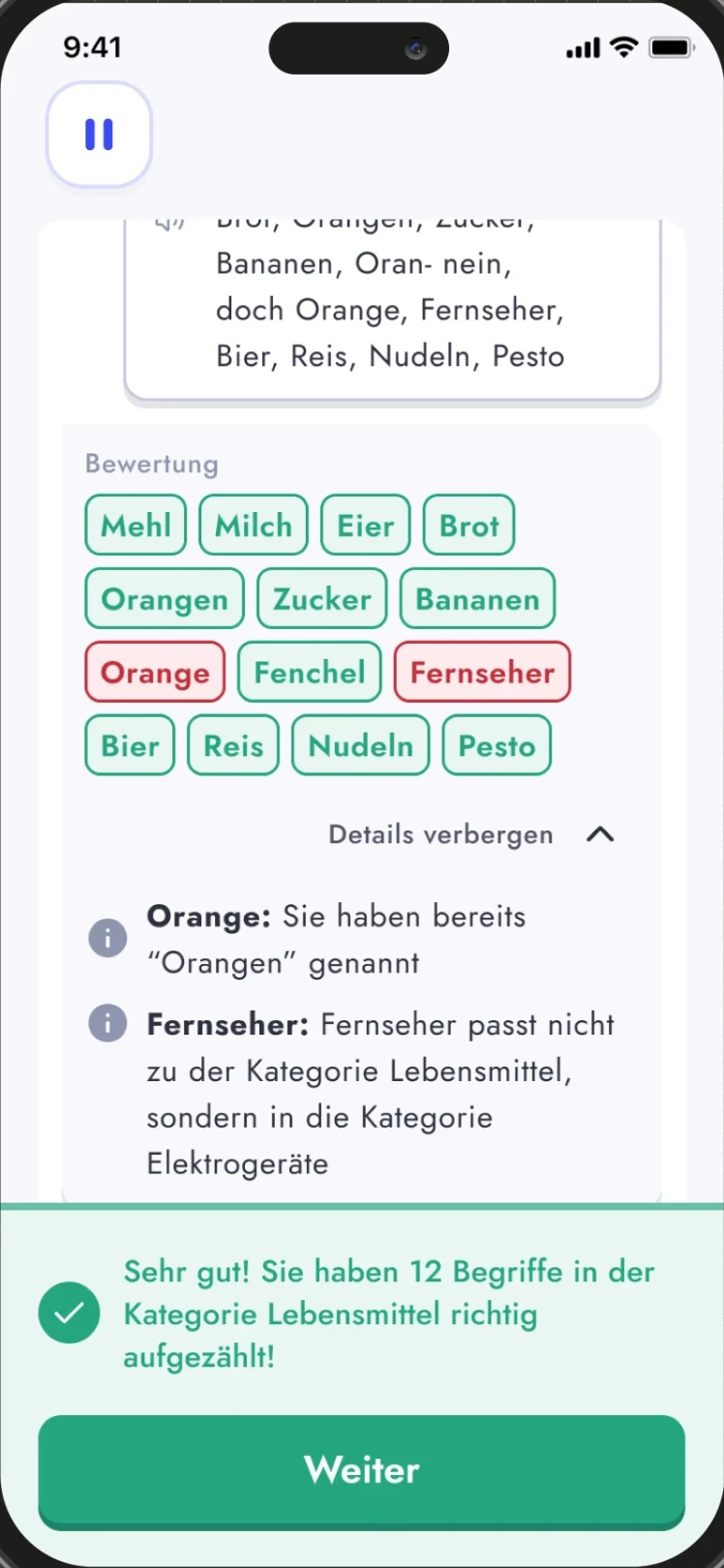
Naming objects, guessing terms, listing categories: you speak, and myReha recognises your answers.
Speech becomes slurred or halting, especially when you are tired.
How you practise with myReha
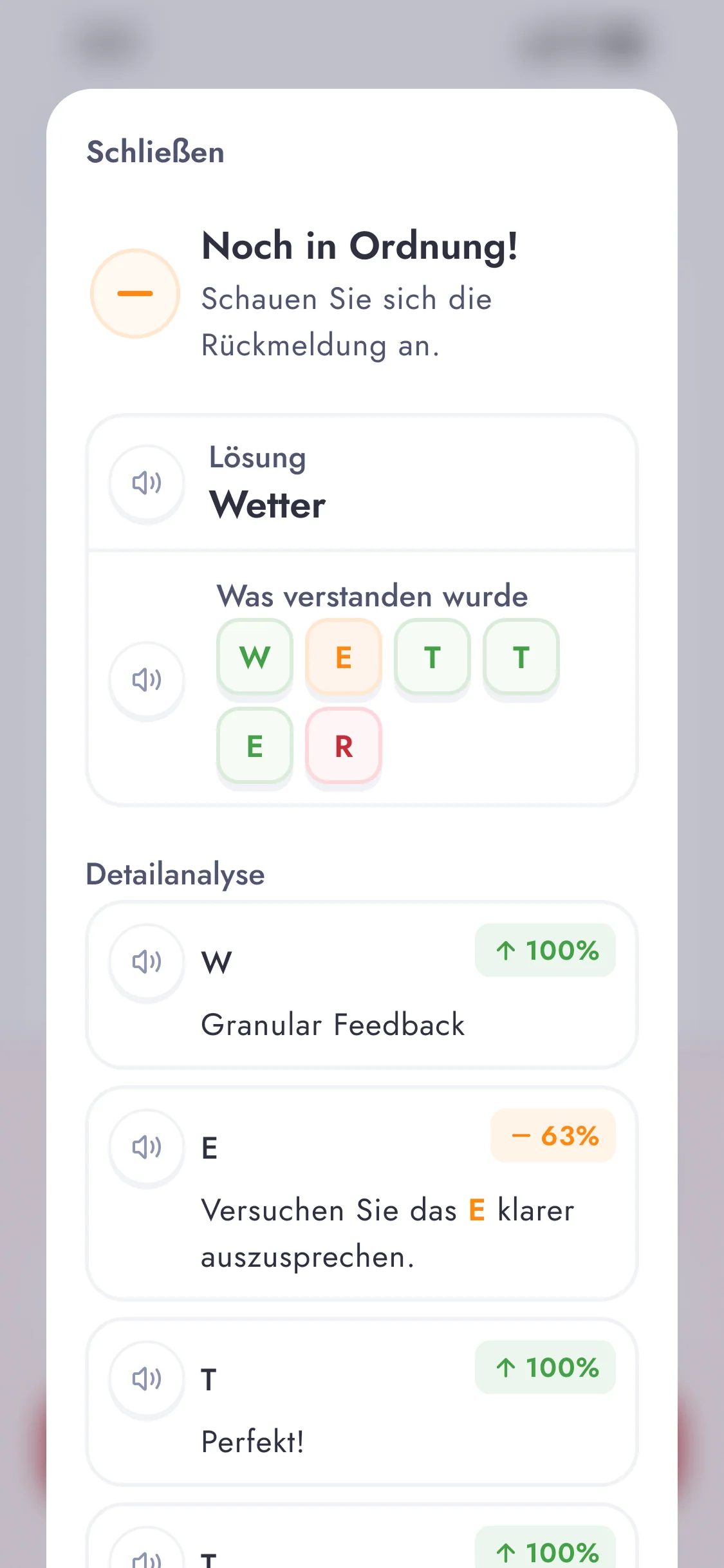
You say words and sentences aloud. myReha listens and shows, sound by sound, what was clear and what you can pronounce more clearly.
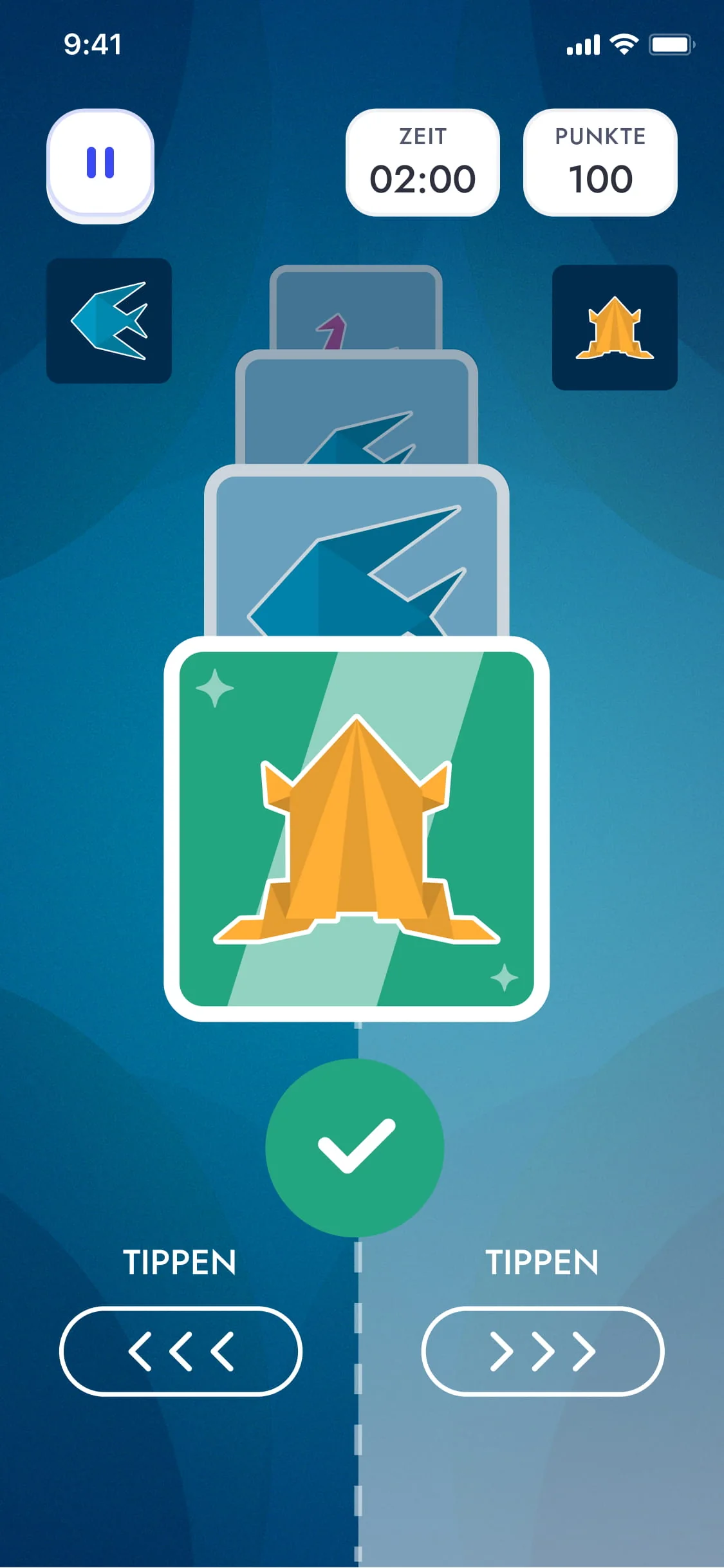
Speed and concentration
Group conversations, reading or working at a screen take more effort. Thinking takes longer.
How you practise with myReha
Tasks that call for quick recognition and sorting. The difficulty only rises as far as suits you.
Medication slows the inflammation. For cognitive impairment there is no effective drug so far: here the guideline relies on training.
For cognitive impairment, neuropsychological treatment should be given, and targeted computer training can be part of it. For processing speed, computer-based attention training is considered well supported.
An analysis of 20 studies with 982 participants found small to moderate improvements in attention, processing speed, memory and planning. How much of that shows in everyday life is not yet settled.
Without further practice the effects fade. For training at home, the guideline advises guidance from a therapist. myReha adds to your therapy but does not replace it.
Sources: German S2k guideline on multiple sclerosis, DGN 2026 (recommendations E22, E23). German S2e guideline on attention disorders, DGN and GNP 2023. Lampit et al., Neurorehabilitation and Neural Repair 2019.
Holding an order in mind for a moment calls on attention and working memory. Both can decline in MS. myReha adapts every task to the last one. Try it.
Difficulty
A sample task for this page. In the app you will find more than 100,000 tasks with pictures, speech and sound.
1 / 4
Remember three tiles
Tiles light up one after another. Then tap them in the same order.

MS often affects people in the middle of life, with a job, a family and plans. Much of what weighs on them cannot be seen.
Take the invisible seriously.
Exhaustion and trouble concentrating are part of the disease. They are not a matter of willpower.
Budget energy.
Plan breaks and put what matters into the time of day that works best.
Stay with it together.
Ask how practice is going and enjoy small steps forward. How much to practise is up to the person affected.
With many health insurers, myReha is free for you. The check shows in a few steps whether that applies to your diagnosis.
€0
instead of €349.99, for six months
from€58.33
per month, the first 7 days free
The subscription renews automatically and can be cancelled at any time, effective at the end of the term.
€0
to get to know myReha
Your health insurer isn't a partner? More and more insurers cover the cost on request. How to apply.
No. The course is influenced by the medication your neurologist chooses with you. Training addresses the consequences: you practise attention, memory, language and speech.
There are good indications. For cognitive impairment, the guideline recommends neuropsychological treatment, and targeted computer training can be part of it. Studies show small to moderate improvements. For the progressive courses the evidence is thinner: one large study found no advantage there for computer-based speed training over a comparison training. myReha itself has so far been studied mainly with people after a stroke. In an observational study with 195 rehab patients about 9% had MS, and results were not analysed separately.
In an acute relapse, medical treatment comes first. New symptoms that last longer than 24 hours can be a relapse: in that case contact your neurology practice. Practise again when you feel able to.
Practise briefly and at a time of day when you have energy. For many people exhaustion grows towards the evening, and heat makes it worse. Take breaks and stop before you are worn out. Your progress stays saved.
No. myReha adds to therapy. It helps most when you agree with your therapist what to practise at home. A neuropsychological assessment shows which areas are affected.
On iPhone and iPad from iOS 16 and on Android devices from Android 6. The display is larger on a tablet. You need an internet connection.
No. With many partner insurers myReha is free without a prescription. Under "Check coverage" you can see in a few steps whether your insurer takes part.
Create an account. Tell us briefly what your goal is.
Sort out the cost. We show you whether your insurer covers it.
Get going. Sign in to the app and start.
Are you a therapist or do you work in a clinic?