
12 months
Most popular$12.50
per month$149.99 for 12 months
Start free for 7 days

What happens in the brain in dementia, what changes in everyday life, and memory and language exercises you can do together with nyra therapy.
Dementia changes a great deal. Staying active and engaged is one of the things you can do yourself.
7.4 million
Americans age 65 and older are living with Alzheimer's
about 1 in 9
people age 65 and older has Alzheimer's
60–80%
of dementia cases are caused by Alzheimer's disease
Sources: Alzheimer's Association, 2026 Alzheimer's Disease Facts and Figures. Alzheimer's Association, What Is Dementia? (2026).
Dementia is a general term for diseases in which nerve cells in the brain gradually lose their connections and die. The most common is Alzheimer's disease.
Nerve cells are closely connected and constantly exchange signals. That is how remembering, speaking and planning come about.
In Alzheimer's, the protein beta-amyloid clumps into plaques between the nerve cells, and tangles of the protein tau form inside the cells.
Nerve cells lose their connections with one another. Signals are passed on less well.
Over time nerve cells are lost in more and more areas of the brain. What they used to do becomes harder.
Alzheimer's disease
The most common cause, at 60 to 80% of cases. Trouble remembering newly learned information is usually the first sign.
Vascular dementia
About 5 to 10% of people with dementia have vascular dementia alone. Blocked or damaged blood vessels harm the brain, for example after strokes.
Lewy body dementia
Typical signs are fluctuating attention, visual hallucinations and movement problems like those in Parkinson's.
Frontotemporal dementia
Most people are diagnosed in their 40s to early 60s. It often changes behavior or language first.
Mixed dementia, a combination of two or more forms, is common. Sources: Alzheimer's Association, What Is Dementia? and Types of Dementia (2026). National Institute on Aging, Alzheimer's Disease Fact Sheet (2023).
The changes usually begin deep in the temporal lobe, where the hippocampus forms new memories, and spread from there. The stages overlap.
Blue: the areas affected at this stage. The dot marks the hippocampus, deep inside the temporal lobe.
In the brain
First changes around the hippocampus. They can show up in tests, mainly of short-term memory.
In everyday life
What matters now
Regular checkups: the National Institute on Aging advises seeing a doctor or specialist every six to 12 months. It is also a good time to set up daily routines and stay active.
On average, a person with Alzheimer's lives four to eight years after diagnosis, and some live as long as 20 years. How fast it progresses differs greatly from person to person.
Simplified view. Sources: Alzheimer's Association, Stages of Alzheimer's and Mild Cognitive Impairment (2026). National Institute on Aging, Alzheimer's Disease Fact Sheet (2023) and What Is Mild Cognitive Impairment? (2021).
nyra therapy offers more than 100,000 exercises for speech, language, memory, attention and everyday skills. For people living with dementia, they bring mental activity, a daily routine and time spent together.
What was just said is quickly gone, names and appointments slip away. Memories from long ago often stay for a long time.
Practice with nyra therapy
Memory exercises in small steps: take in pictures, routes or a shopping list and repeat them shortly afterwards.
The right word is on the tip of the tongue, conversations become more tiring. Many people withdraw because of it.
Practice with nyra therapy
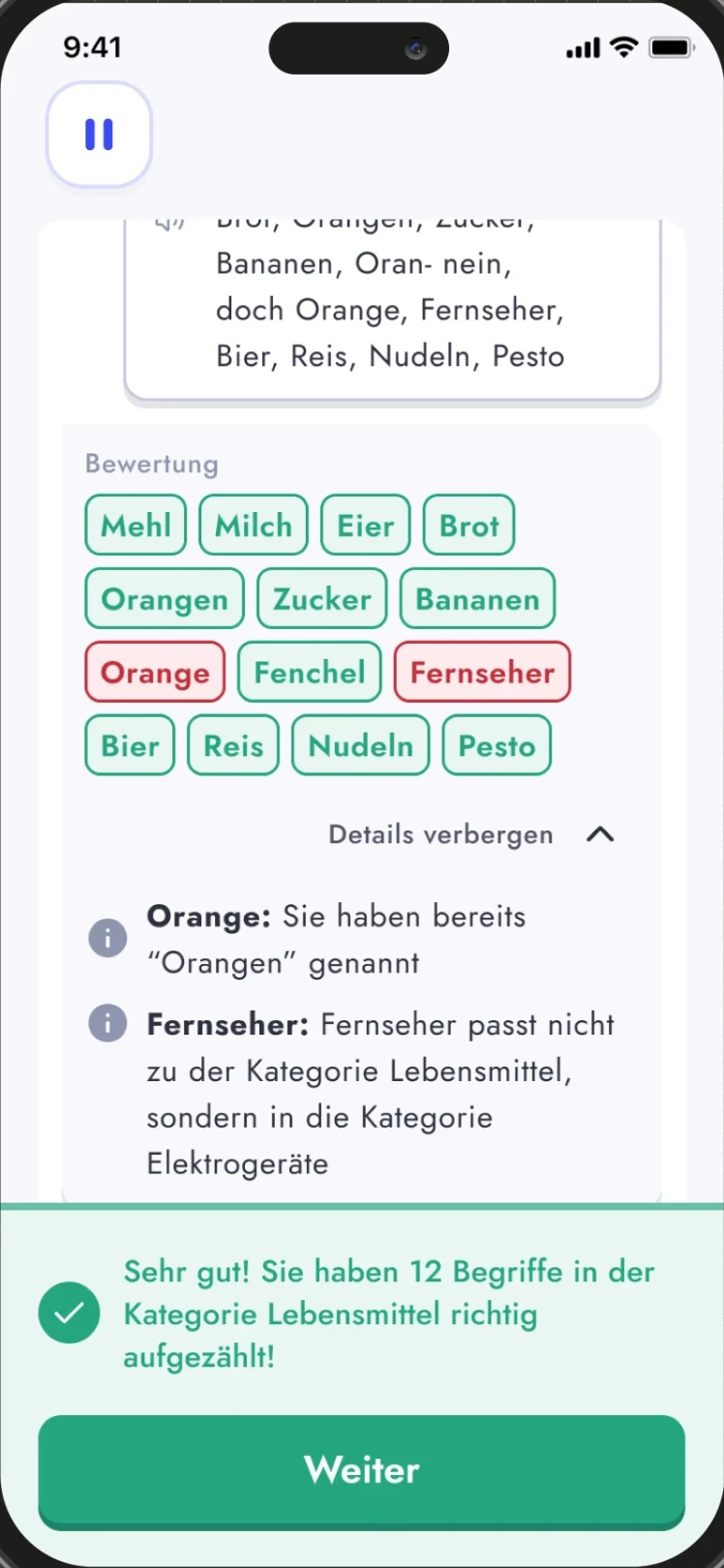
Naming objects, guessing terms, listing categories: you answer out loud and get real-time feedback.
Concentration fades faster, especially when several things happen at once.
Practice with nyra therapy
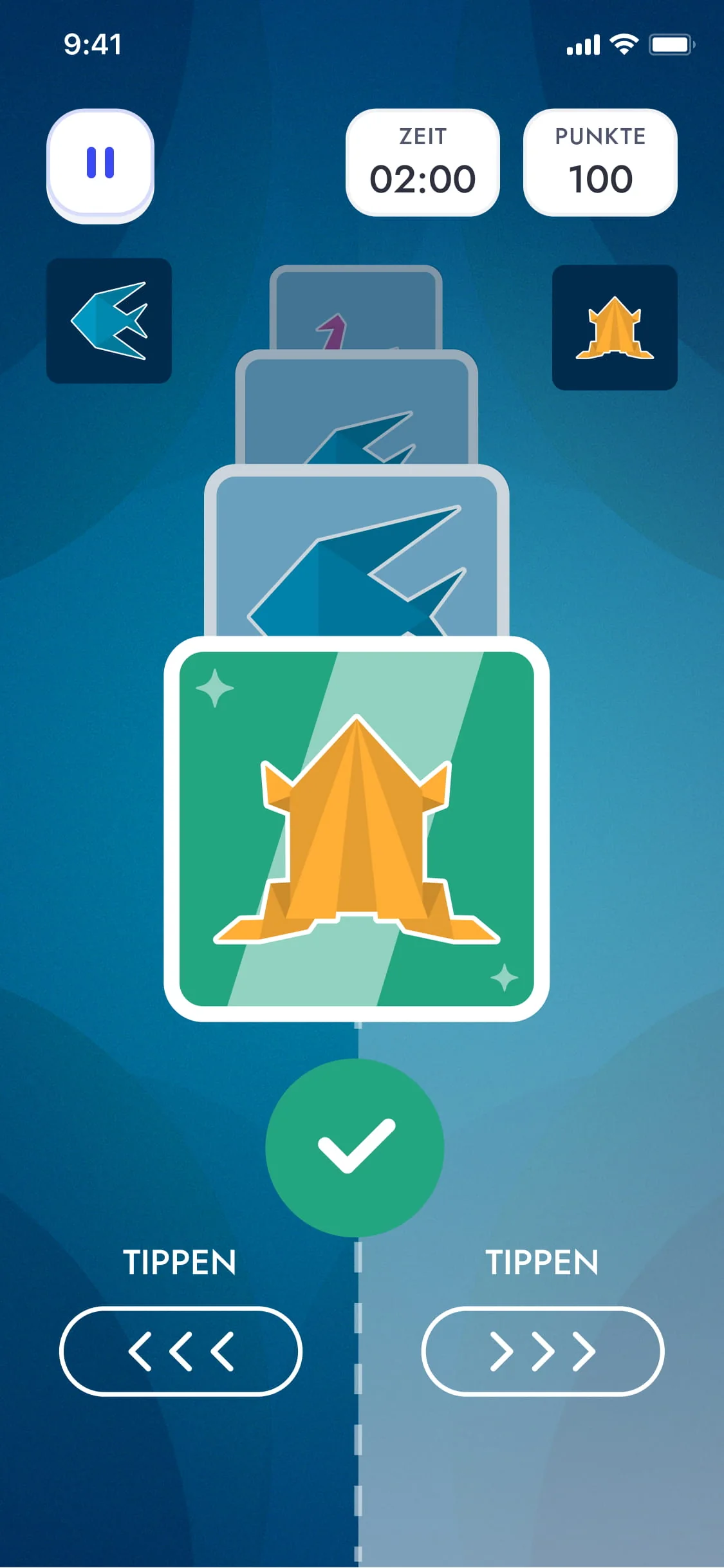
Short exercises that depend on looking closely and sorting quickly, with feedback after every answer.
Familiar routines such as cooking or getting dressed get muddled because the order is hard.
Practice with nyra therapy
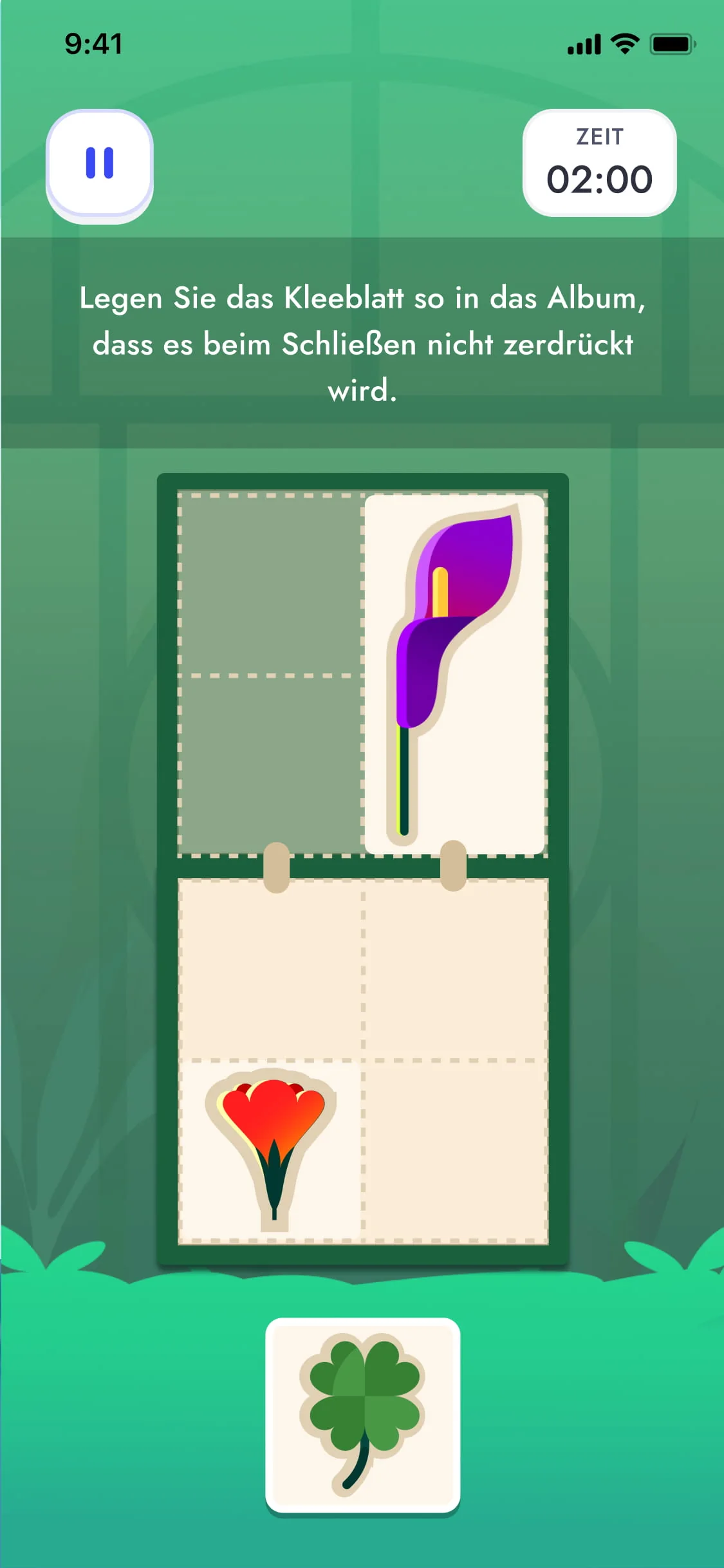
Exercises that call for thinking ahead: what has to go where so that it fits in the end?

Remembering
What was just said is quickly gone, names and appointments slip away. Memories from long ago often stay for a long time.
Practice with nyra therapy
Memory exercises in small steps: take in pictures, routes or a shopping list and repeat them shortly afterwards.
No app stops dementia, and nyra therapy does not claim to. Staying active and engaged is still part of living well with it. We say openly what is known and what is not.
The National Institute on Aging says people with Alzheimer's need to be active and do things they enjoy. The Alzheimer's Association advises helping the person stay engaged, with activities matched to what they can do.
The National Institute on Aging advises caution with claims that computer games can sharpen memory and thinking, because there is not enough evidence so far. nyra therapy does not claim to slow, delay or prevent dementia. Its exercises offer mental activity, a routine and shared time.
Practice together, keep sessions short and stop when it is no longer enjoyable. Use nyra therapy in consultation with your doctor or therapist.
Sources: National Institute on Aging, Adapting Activities for People With Alzheimer's Disease (2024) and Cognitive Health and Older Adults (2024). Alzheimer's Association, Activities (2026).

You are often the most important support. When you practice, the time together and small moments of success matter more than the result.
Regular times, short sessions.
A steady daily routine gives a sense of security. Practice briefly and regularly instead of rarely and for a long time.
Praise, don't correct.
Point out what went well and do not draw attention to mistakes. Allow time to answer.
Use what is familiar.
New things are hard, and familiar things come more easily. Choose topics from the person's own life.
nyra therapy is a subscription. You can try all exercises free for 7 days.
$12.50
per month$149.99 for 12 months
Start free for 7 days$21.66
per month$64.99 for 3 months
Start free for 7 days$24.99
per month
Start free for 7 daysNo. nyra therapy does not stop, slow or prevent dementia, and we do not claim that it does. What the exercises offer is mental activity, a daily routine and time spent together. Talk to your doctor about medical care for dementia.
The exercises are designed to support daily practice for people living with mild cognitive impairment or mild to moderate dementia who can use a phone or tablet, ideally together with a family member. nyra therapy is not suitable in severe dementia.
No. Whether practicing on a phone or tablet changes the course of dementia has not been shown, and we do not claim it. The National Institute on Aging advises caution with claims that computer games can sharpen memory and thinking. We suggest practicing together and using nyra therapy in consultation with your doctor or therapist.
Briefly and regularly instead of rarely and for a long time. Start with ten to fifteen minutes a day, for example. Stop when concentration fades or practice is no longer enjoyable.
No. nyra therapy does not replace care from your doctor, a speech-language pathologist or an occupational therapist, and it does not replace medication. It offers exercises for practice at home, which you can also use alongside sessions with your therapist.
Yes, and we suggest it. Sit together, read the exercise aloud if that helps and allow time to answer. You can also share your practice activity with your clinician.
nyra therapy is a subscription: $24.99 for 1 month, $64.99 for 3 months or $149.99 for 12 months. You can try all exercises free for 7 days.
nyra therapy runs on phones and tablets: iPhone, iPad and Android devices. You download it from the App Store or Google Play.
Get the app. Download nyra therapy from the App Store or Google Play.
Try it free. Your first 7 days are free. You can cancel at any time.
Start practicing. Choose your goals and begin your first exercises.
Are you a therapist, or do you work in a clinic?