

12 months
Most popular$12.50
per month$149.99 for 12 months
Start free for 7 days

What happens in the brain in Parkinson's, why speaking and concentrating can get harder too, and how speech and cognitive exercises from nyra therapy fit into your day.
Parkinson's is more than tremor. Voice, speech and thinking can change too, and daily practice can be part of living well with it.
1.1 million
people in the United States live with Parkinson's
60–80%
or more of the dopamine-producing cells are usually lost by the time symptoms appear
about 75%
experience changes in speech and voice at some point
Sources: Parkinson's Foundation, Statistics and Speech & Swallowing guide (accessed 2026). National Institute of Neurological Disorders and Stroke (NINDS), Parkinson's Disease (reviewed 2026).
Parkinson's disease is a brain disorder that gets worse over time. In a small region deep in the brain, the substantia nigra, the nerve cells that make the chemical messenger dopamine gradually weaken and die.
Substantia nigra, deep in the midbrain
Signal
The sending cell releases dopamine. It crosses the gap, docks and passes the signal on: movements run smoothly.
The messenger passes signals from nerve cell to nerve cell, above all where the brain produces smooth, purposeful movements.
By the time symptoms appear, most people have lost 60 to 80% or more of these cells. So the changes begin long before.
Parkinson's can also affect attention, memory and planning. That is why voice, speech and thinking often change too.
Simplified view. Sources: NINDS, Parkinson's Disease (reviewed 2026); Parkinson's Foundation, What Is Parkinson's? and Cognitive Changes (accessed 2026).
What others see is only one part. Many symptoms stay below the surface and can be just as hard to live with.
What people see
What people often do not see
What people see
What people often do not see
Areas with exercises in nyra therapy
Sources: Parkinson's Foundation, Non-Movement Symptoms (accessed 2026); NINDS, Parkinson's Disease (reviewed 2026).
About three in four people with Parkinson's experience changes in speech and voice at some point. The voice becomes quieter and flatter, and speech less clear.
Healthy voice
Voice with Parkinson's
The voice becomes quieter. It hardly carries over background noise.
Many people with Parkinson's judge their voice to be louder than it is. What feels normal to them reaches others too quietly. That is why feedback from outside matters: from a speech-language pathologist and from the people around you.
Schematic view. Sources: Parkinson's Foundation, Speech & Swallowing (accessed 2026); NINDS, Parkinson's Disease (reviewed 2026); Ho et al., Movement Disorders 2000.
nyra therapy is an app with more than 100,000 exercises for speech, language, memory, attention and everyday skills. You practice at home whenever it suits you, with exercise recommendations based on your personal needs.
Others ask you to repeat yourself more often, and phone calls become hard work. Many people speak less because of it.
How you practice with nyra therapy
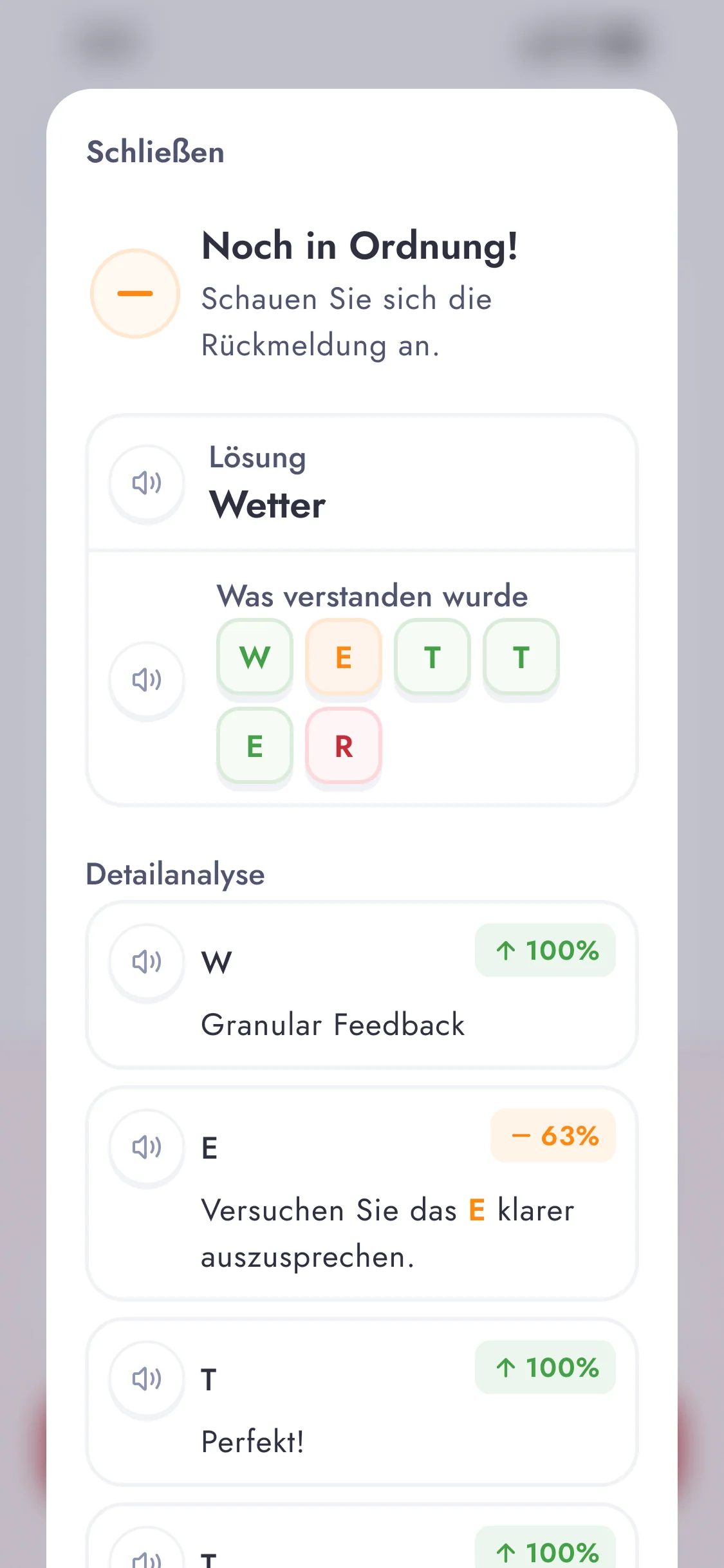
You say words and sentences aloud. nyra therapy listens and gives you real-time feedback, sound by sound.
The right word does not come, and sentences break off.
How you practice with nyra therapy
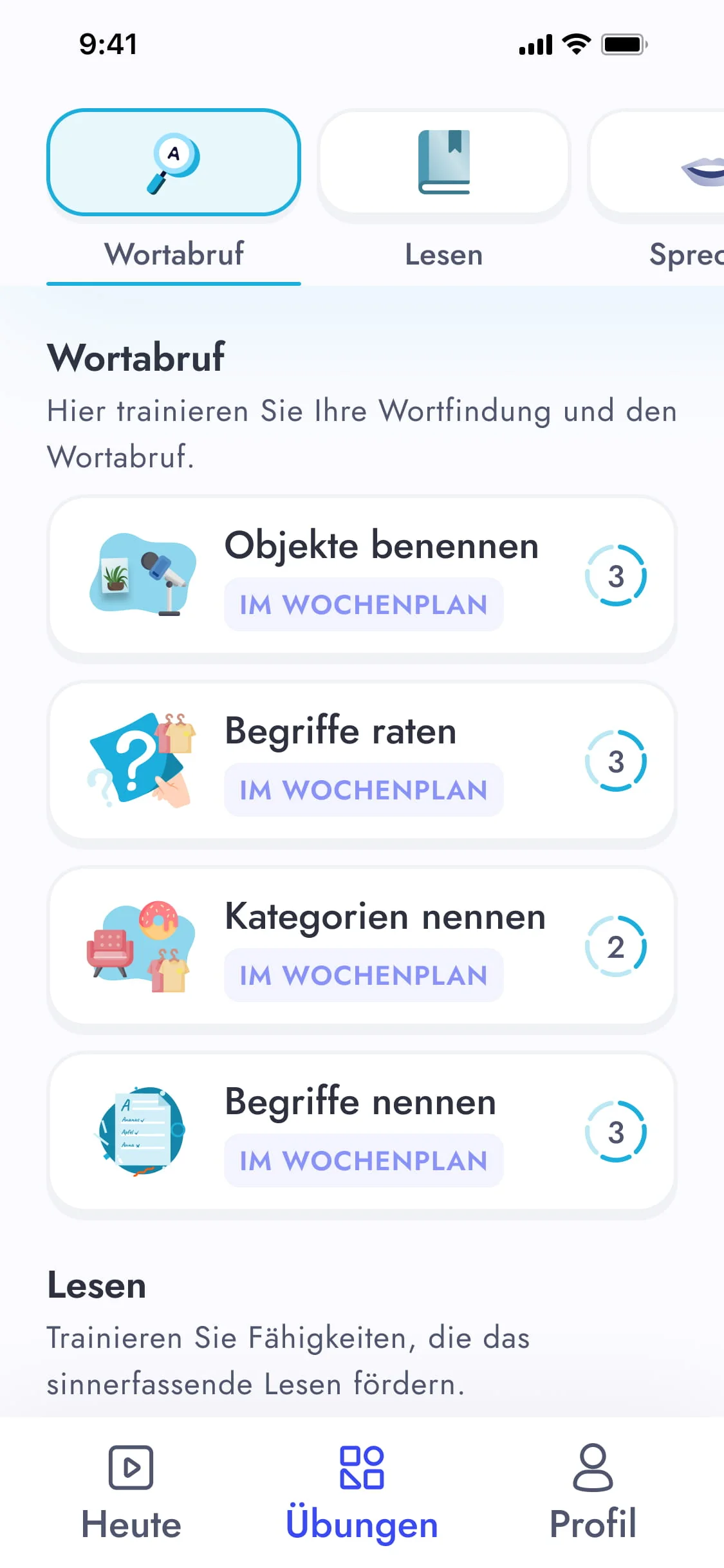
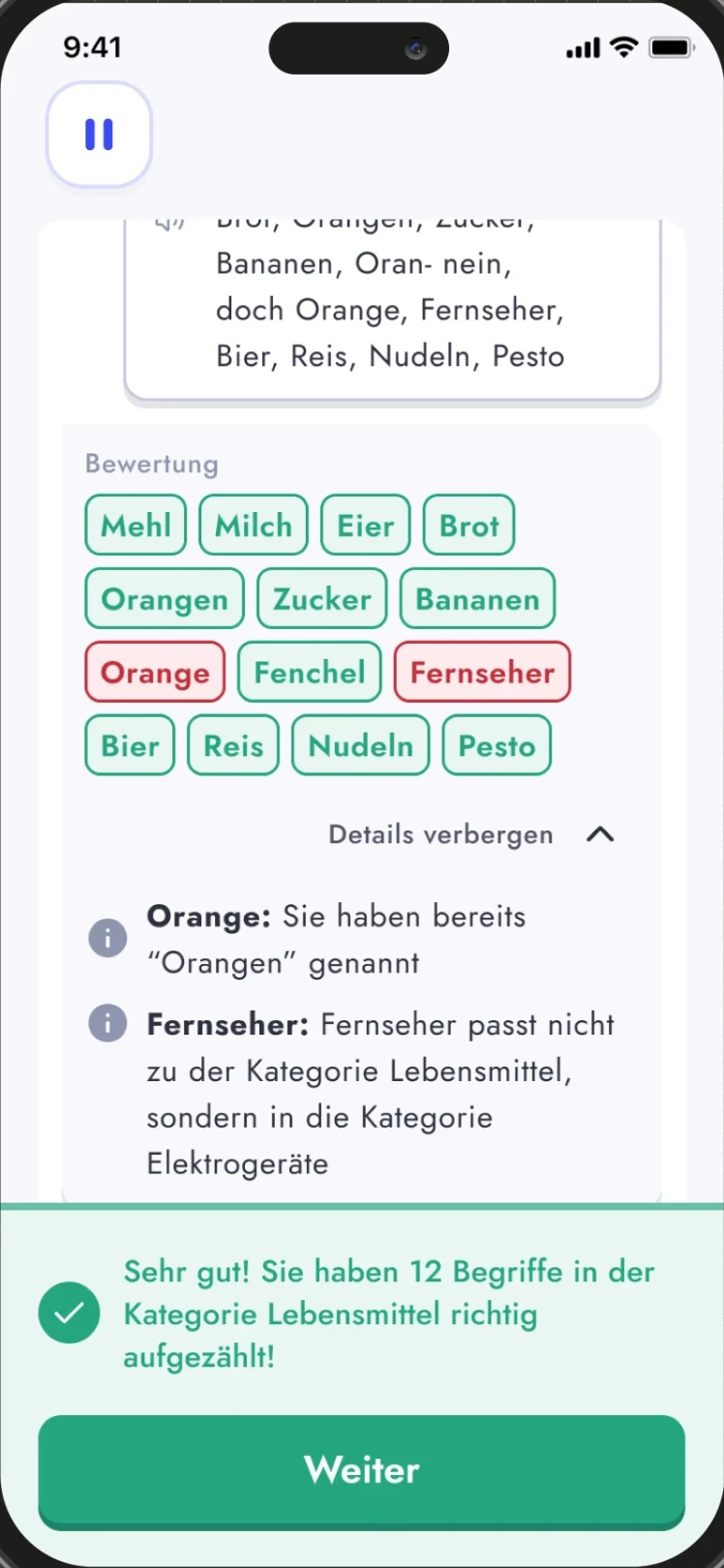
Naming objects, guessing words, listing categories: you answer out loud, and nyra therapy recognizes what you say.
Thinking slows down, and doing two things at once quickly becomes too much.
How you practice with nyra therapy
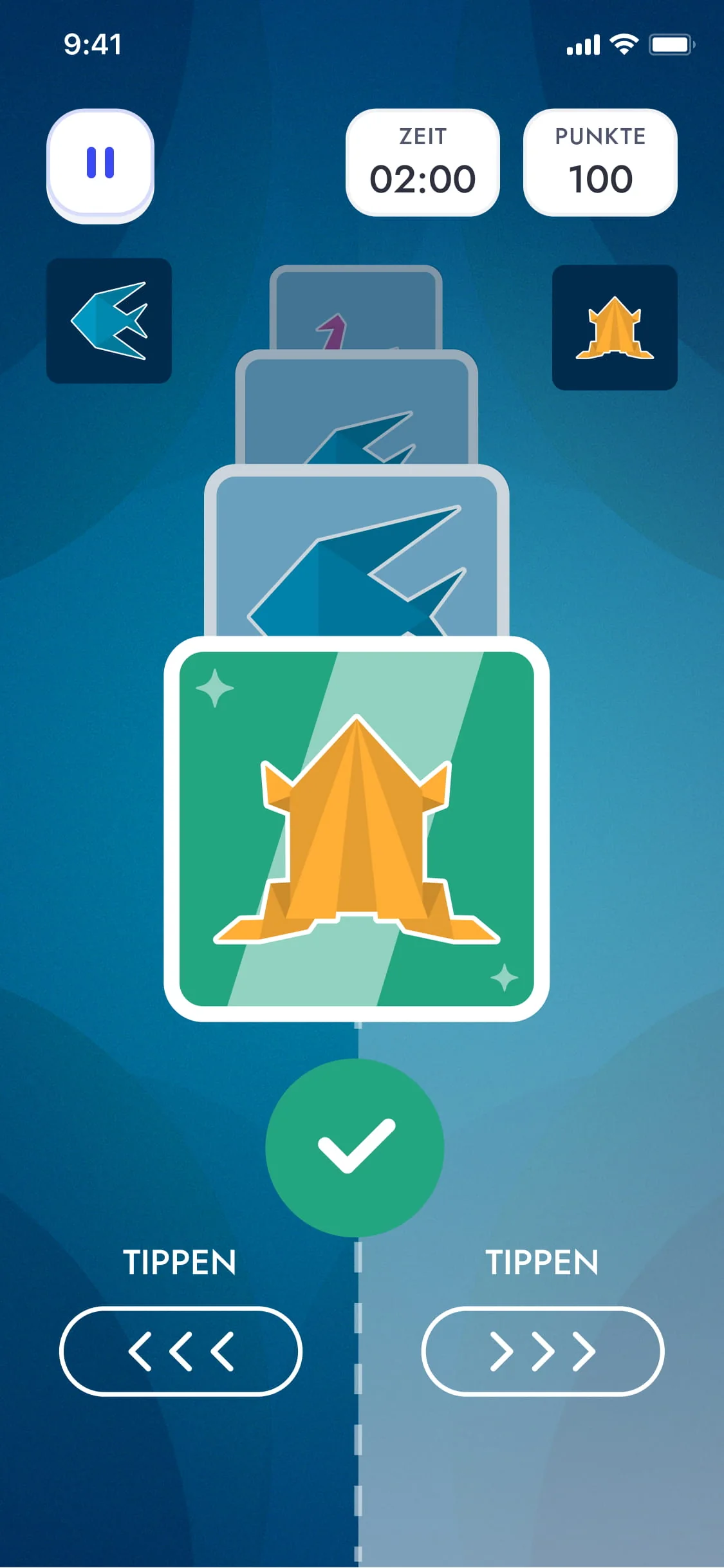
Exercises that call for quick recognition and sorting. You decide how long and how often you practice.
Routines with several steps, such as cooking or filling out a form, take more effort.
How you practice with nyra therapy
Exercises that call for thinking ahead: first consider, then act.
What you learned is still there, but recalling it takes longer.
How you practice with nyra therapy
Memory exercises in small steps: take in, hold, repeat.
Pronunciation
Others ask you to repeat yourself more often, and phone calls become hard work. Many people speak less because of it.
How you practice with nyra therapy
You say words and sentences aloud. nyra therapy listens and gives you real-time feedback, sound by sound.
Medication is the basis of medical care in Parkinson's. For voice, speech and thinking, your care team can also include speech-language pathologists, occupational therapists and neuropsychologists.
The Parkinson's Foundation describes working with a speech-language pathologist as the gold standard for speech and voice changes, and advises getting an evaluation early. Voice programs such as LSVT LOUD are delivered by certified speech-language pathologists.
If attention, planning or word finding change, your neurologist may suggest a neuropsychologist for a detailed evaluation. Occupational therapists and speech-language pathologists can help you find strategies for daily life.
nyra therapy offers speech and cognitive exercises for daily practice, as part of living well with Parkinson's. It is not a voice program such as LSVT LOUD and does not replace your speech-language pathologist. People using the app complete on average 4+ additional hours of practice per week.
Sources: Parkinson's Foundation, Speech & Swallowing and Cognitive Changes (accessed 2026). Practice hours: Real-world data from Europe.

You are often the first to hear when the voice gets quieter, and you can do a lot to help make practice a habit.
Give honest feedback.
Say kindly when you have not understood something. Many people with Parkinson's do not notice that they are speaking quietly.
Allow time.
Answers can take longer. Let the person finish instead of completing their sentences.
Use the good times of day.
Practice is easier when the medication is working well. Plan sessions for those times.
nyra therapy is a subscription. You can try all exercises free for 7 days.
$12.50
per month$149.99 for 12 months
Start free for 7 days$21.66
per month$64.99 for 3 months
Start free for 7 days$24.99
per month
Start free for 7 daysYes, for as long as it suits you. Parkinson's gets worse over time, and nyra therapy does not slow or stop it. Many people keep speech and cognitive practice in their routine as part of living well with Parkinson's. Talk with your doctor or speech-language pathologist about what fits you at each stage.
No. nyra therapy is not a voice program such as LSVT LOUD, and it does not replace your speech-language pathologist. It offers exercises you can practice on your own between appointments: speaking clearly with real-time feedback, word finding, attention and planning.
When you can move and concentrate well, for many people at times when the medication is working well. Shorter sessions on many days are easier to keep up than one long session a week.
No. Medication and medical care stay with your doctor. nyra therapy offers exercises for daily speech and cognitive practice. Use nyra therapy in consultation with your doctor or therapist.
Yes. You can use it on your own, alongside sessions with your therapist, or share your practice activity with your clinician. A family member can sit with you, help you get started and remind you of your practice times.
On iPhone and iPad with iOS 16 or later and on Android devices with Android 6 or later. Everything is larger on a tablet. You need an internet connection.
nyra therapy is a subscription: $24.99 for 1 month, $64.99 for 3 months or $149.99 for 12 months. You can try all exercises free for 7 days.
Get the app. Download nyra therapy from the App Store or Google Play.
Try it free. Your first 7 days are free. You can cancel at any time.
Start practicing. Choose your goals and begin your first exercises.
Are you a therapist, or do you work in a clinic?